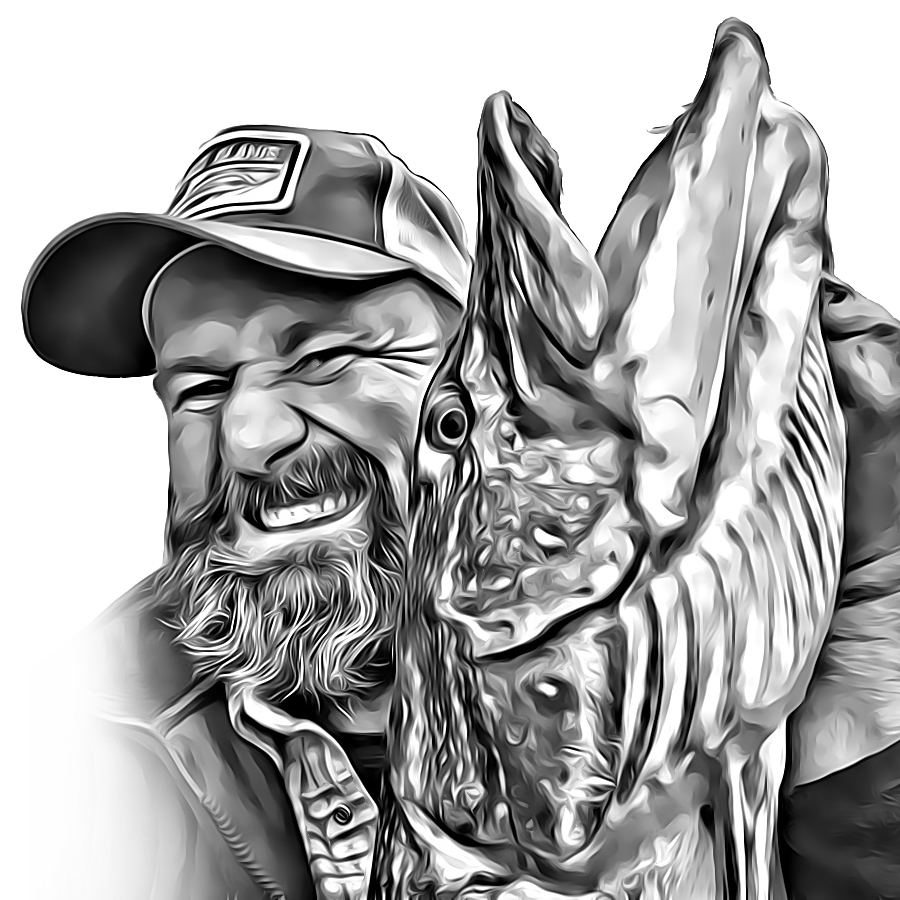
If you’ve fished for northern pike back home in North America and you’re planning a trip to Amsterdam or elsewhere in The Netherlands, you might assume you already know what you’re dealing with. After all, a pike is a pike, right? Not quite.
Before you read on, I want to point at this article about the difference between the American walleye and the European zander.
1. Introduction – same family, very different reputations
While the European northern pike and American northern pike are indeed the same species—Esox lucius—the fishing experience can feel surprisingly different due to environmental and ecological factors. Spoiler alert: our European pike are both longer, heavier and stronger than the American counterpart. And what about the muskie? Here’s where many anglers get it completely wrong too: they assume muskie are just bigger, meaner pike. They’re not. Muskie (Esox masquinongy) are a distinct species with fundamentally different biology, behavior, and ecological roles.
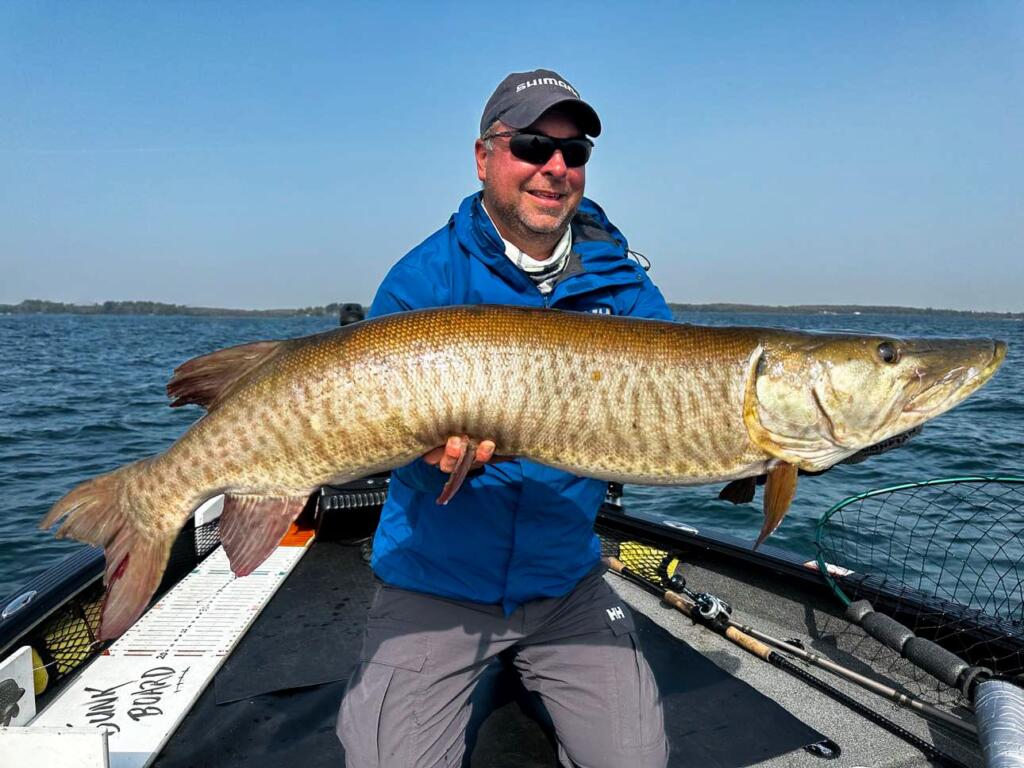
In this article, I’ll break down the real differences between European northern pike, American northern pike, and muskie—covering taxonomy, distribution, physical characteristics, behavior, and what all of this means when you’re actually on the water. Whether you’re fishing with me in and around Amsterdam’s urban canals and lakes, trolling the lakes of Minnesota, or chasing muskie in Wisconsin, understanding these distinctions will make you a more effective and informed angler.
2. Taxonomy and evolution – what does science say?
All pike and muskie belong to the genus Esox, a group of predatory freshwater fish that has been around for millions of years. But while they share a common ancestor, the species we fish for today have taken very different evolutionary paths.
Esox lucius – the northern pike – is found across the entire northern hemisphere. This is the same species whether you’re fishing in Amsterdam’s Amstel River, the waters of Friesland, Minnesota’s lakes, or Siberian rivers. European northern pike and American northern pike are genetically identical at the species level, though regional populations have adapted to local conditions over thousands of years. These adaptations—driven by factors like prey availability, water temperature, and seasonal cycles—have influenced growth rates, behavior, and even coloration big time.
Esox masquinongy – the muskellunge or muskie – is a completely separate species, endemic only to North America. Muskie evolved in the Great Lakes region and surrounding watersheds, diverging from a common ancestor with northern pike roughly 5 to 10 million years ago. This evolutionary split resulted in a fish that occupies a different ecological niche: a low-density apex predator with specialized energy strategies.
The key takeaway? European and American northern pike are the same fish adapting to different environments. Muskie are not pike at all—they’re a distinct species that happens to look similar. Understanding this distinction is the foundation for everything that follows.
3. Distribution and habitat – this is not the same fish in a different pond
European northern pike: Amsterdam and The Netherlands
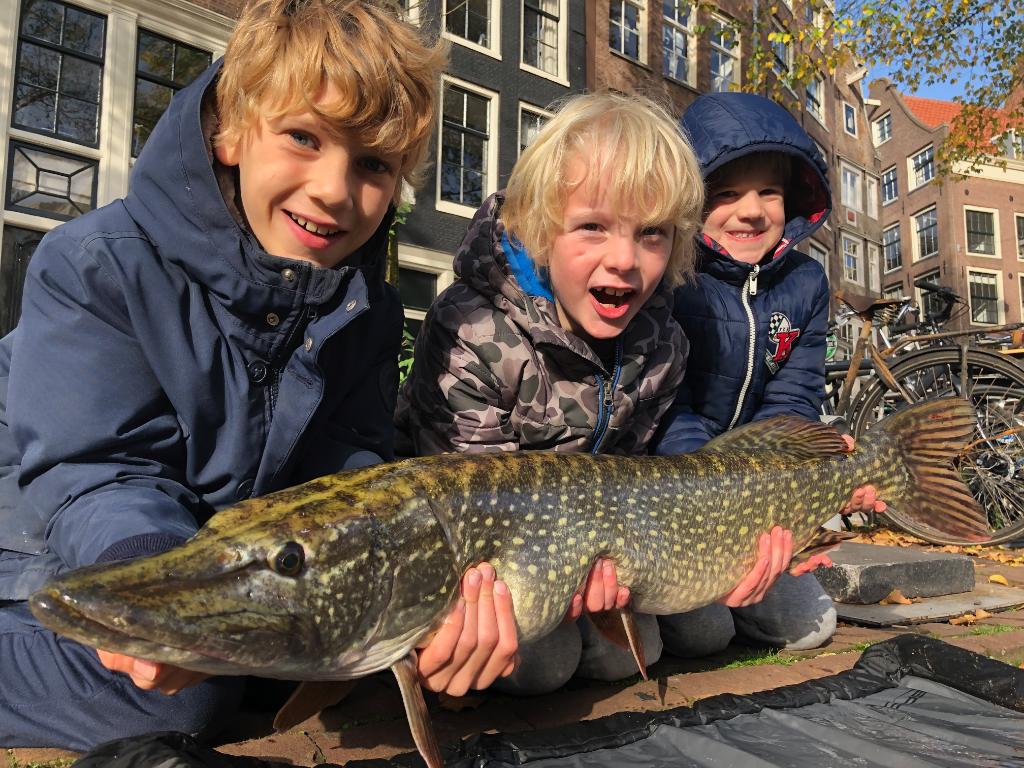
European northern pike are found throughout Europe, from Ireland to Russia, and from Scandinavia down to the Mediterranean regions. But some of the most productive pike waters in the world are right here in The Netherlands—and as a fishing guide working in and around Amsterdam, I can tell you firsthand that these urban and peri-urban waters are exceptional.
Amsterdam’s canals, the Amstel River, and the vast network of polders, lakes, and waterways surrounding the city create ideal pike habitat. The key? An abundance of prey fish and extensive weed growth. Dutch waters are incredibly healthy ecosystems with thriving populations of roach, bream, perch, and rudd. This abundant fat food supply, combined with dense aquatic vegetation that provides ambush cover and optimal spawning conditions, allows pike to reach truly impressive sizes. In fact, some of the largest pike ever recorded have come from Dutch waters—world-record-class fish that benefit from this unique combination of prey density and habitat quality.
Why European northern pike grow larger than American northern pike
Even though we’re talking about the same species—Esox lucius—European northern pike consistently grow larger and heavier than their American counterparts, and the reasons are primarily ecological. In The Netherlands and much of Europe, pike have access to enormous shoals of non-predatory, high-fat prey fish: roach, rudd, and bream. These species school in their thousands, providing pike with calorie-dense food sources that are relatively easy to hunt. American northern pike, by contrast, typically feed on predatory species like yellow perch, walleye, and smaller bass—more lean fish that exist in lower densities and require more energy to catch.
Add to this the climate factor: our winters in The Netherlands are short and relatively mild. Pike here remain active and feeding for most of the year. In much of North America, northern pike spend months under ice in a state of near-hibernation, drastically reducing their annual feeding window. More food, longer feeding seasons, and higher-calorie prey create the perfect conditions for producing truly massive pike—the kind that put Dutch waters on the world map.
American northern pike: familiar species, different context
In North America, northern pike occupy a massive range from Alaska down through the Great Lakes states and across Canada. They thrive in similar habitats—weedy bays, river systems, and lakes with healthy forage populations. However, the ecological context differs. North American waters, as stated above, have different prey species (yellow perch, cisco, suckers), and different seasonal temperature swings.
The fish is the same, but the environment shapes behavior, growth rates, and angler strategies.
Muskie: limited range, specialized habitat
Muskie, by contrast, have a much smaller native range. They’re found primarily in the Great Lakes basin, the upper Mississippi River system, and select watersheds in the southeastern United States and Canada. Unlike the adaptable and widespread northern pike, muskie occupy a narrow ecological niche. They prefer larger, deeper lakes and river systems with complex structure—rocky points, submerged timber, deep weed edges.
Muskie populations are naturally low-density. Even in prime habitat, you might find only one or two muskie per acre, compared to dozens of northern pike. This isn’t a sign of poor habitat—it’s a reflection of their biology. Muskie require vast territories and specific conditions to thrive, making them far more vulnerable to habitat degradation and overfishing
4. Physical differences – more than just size
At first glance, northern pike and muskie look similar enough to confuse even experienced anglers. Both are long, torpedo-shaped ambush predators with sharp teeth and aggressive reputations. But look closer, and the differences become obvious—not just in maximum size, but in body proportions, markings, and structural details.
Maximum length and weight
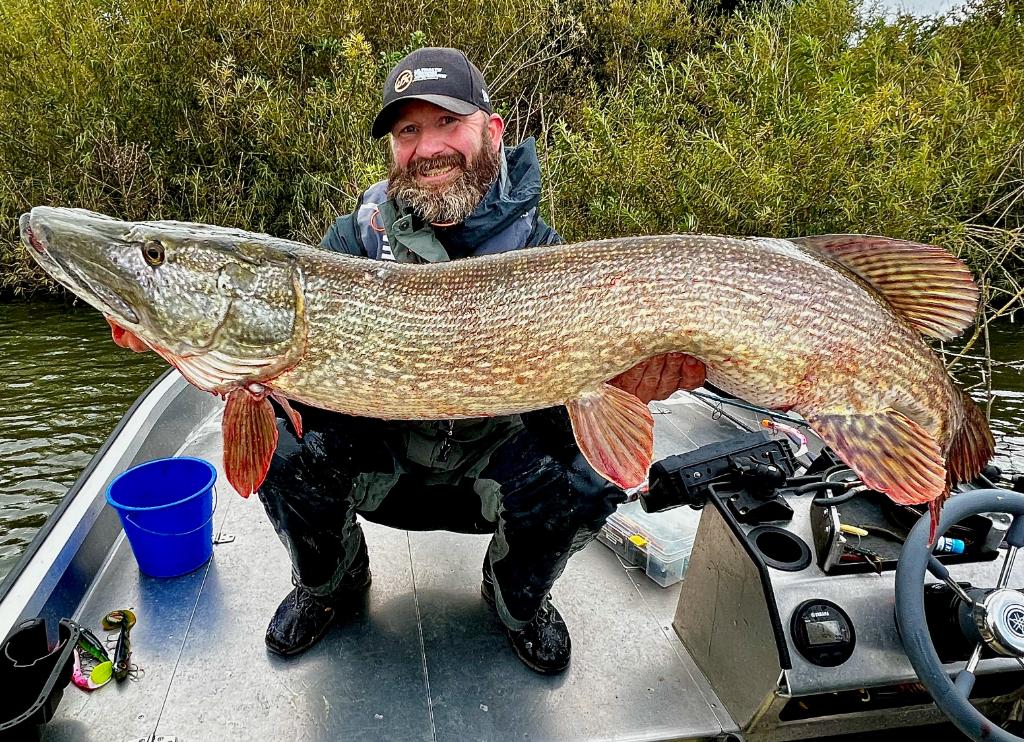
Northern pike can reach impressive sizes in both Europe and North America, but as I mentioned earlier, European fish—particularly those from Dutch waters—grow significantly larger. Here in Amsterdam and throughout The Netherlands, a 1-meter (roughly 40-inch) pike weighing 20 pounds is a realistic goal for visiting anglers. What really stands out is the girth: our pike are not just long, they’re thick, heavy fish with massive shoulders and deep bodies—a direct result of year-round access to abundant, high-calorie prey.
American northern pike typically max out around 15 to 20 pounds, with 30-pounders considered trophy fish. The current IGFA world record for northern pike is 55 pounds 1 ounce, caught in Germany—but multiple unverified reports from The Netherlands and Scandinavia suggest fish over 60 pounds exist in European waters.
Muskie, on the other hand, are the true giants of the Esox genus. The world record muskie stands at 67 pounds 8 ounces (Wisconsin, 1949), and fish over 50 inches are caught every season in prime waters. Muskie are built differently—longer, leaner in some respects, but capable of reaching weights northern pike simply cannot.
Body shape and proportions
Northern pike have a relatively stocky, muscular build with a broad back and prominent dorsal fin set far back on the body. European specimens—especially the well-fed Dutch fish—display exceptional girth through the shoulders and belly, giving them a powerful, almost barrel-chested appearance.
Muskie are more elongated and streamlined. Their bodies are slightly more compressed laterally, and their heads are broader and flatter. The difference is subtle but consistent: if you place a northern pike and a muskie of the same length side by side, the muskie will almost always appear longer and more stretched out.
Head structure and teeth
Both species have duckbill-shaped snouts lined with razor-sharp teeth, but muskie heads are noticeably longer and broader. The lower jaw on a muskie typically has 6 to 9 sensory pores per side, while northern pike have 5 or fewer—a reliable identification feature, though not one you’ll be checking mid-fight.
Muskie also have more developed teeth on the roof of their mouths, which contributes to their ability to hold and manipulate larger prey.
Scale characteristics
This is one of the clearest visual distinctions. Northern pike have scales covering their entire cheek and gill cover (operculum). Muskie have scales only on the upper half of the cheek and gill cover—the lower portions are bare. If you’re ever unsure which species you’re looking at, check the gill plates.
Color patterns
Northern pike are typically olive to greenish-gray with lighter, irregular horizontal markings or spots along the flanks. The pattern is highly variable depending on habitat, but the light-on-dark theme is consistent. The pike that we target on the great lakes called ‘Randmeren’, are known for the beautiful deep green color patterns, due to the plants that they hide in.
Muskie display dark vertical bars or spots on a lighter background—essentially the inverse of northern pike coloration. Some muskie variants, like the barred or spotted strain, show more pronounced patterns, while others (the clear or silver muskie) have minimal markings.
Why muskie biologically tend to live longer
Muskie can live 20 to 30 years in the wild, significantly longer than most northern pike, which typically live 10 to 15 years (though exceptional European specimens can reach 20+). This longevity is tied to their slower metabolism and lower energy expenditure relative to body size. Muskie are built for endurance, not constant activity—a theme that runs through every aspect of their biology.
Common misconceptions about record fish
One myth I hear constantly: “A 50-inch pike and a 50-inch muskie are basically the same fish.” Not even close. A 50-inch northern pike might weigh 25 to 30 pounds. A 50-inch muskie can weigh 40 to 50 pounds. The difference in girth, bone density, and muscle mass is substantial. They’re not interchangeable—they’re fundamentally different animals.
5. Behavior and ecology – why muskie is not just a big pike
This is where the real differences emerge—and where many anglers make costly assumptions. Northern pike and muskie may hunt in similar environments, but their strategies, energy budgets, and ecological roles are fundamentally different.
Hunting behavior
Northern pike are opportunistic ambush predators. They hunt actively throughout the day, striking at anything that moves within range—baitfish, frogs, ducklings, even small mammals. In Dutch waters, I’ve seen the very same pike attack lures repeatedly within minutes, especially during active feeding windows. They’re aggressive, reactive, and relatively easy to trigger.
Muskie, by contrast, are selective. They follow lures, study them, and often refuse to strike even after multiple presentations. This isn’t stubbornness—it’s energy management. Muskie burn fewer calories at rest and are more calculated about when and what they attack.
Territoriality and energy expenditure
Northern pike establish territories but tolerate relatively high population densities, especially where prey is abundant. Multiple pike can coexist in the same weed bed or canal stretch. Good news for you – this makes the pike more a fish of ‘just a few casts’ instead of the famous thousands casts that the muskie requires.
Muskie require vast territories—sometimes several acres per fish. Their low population density isn’t a sign of poor habitat; it’s a biological necessity. They’re apex predators designed to dominate large areas with minimal competition.
Prey selection
Northern pike are generalists. In Amsterdam’s waters, they eat roach, bream, perch, rudd, but also rats and ducklings—whatever is abundant and easy to catch. This adaptability is why they thrive across such a wide range.
Muskie are specialists, often targeting larger prey relative to their body size. They’ll ignore small baitfish in favor of 12- to 18-inch suckers, cisco, or even other pike. This preference for larger meals reflects their energy-conserving strategy.
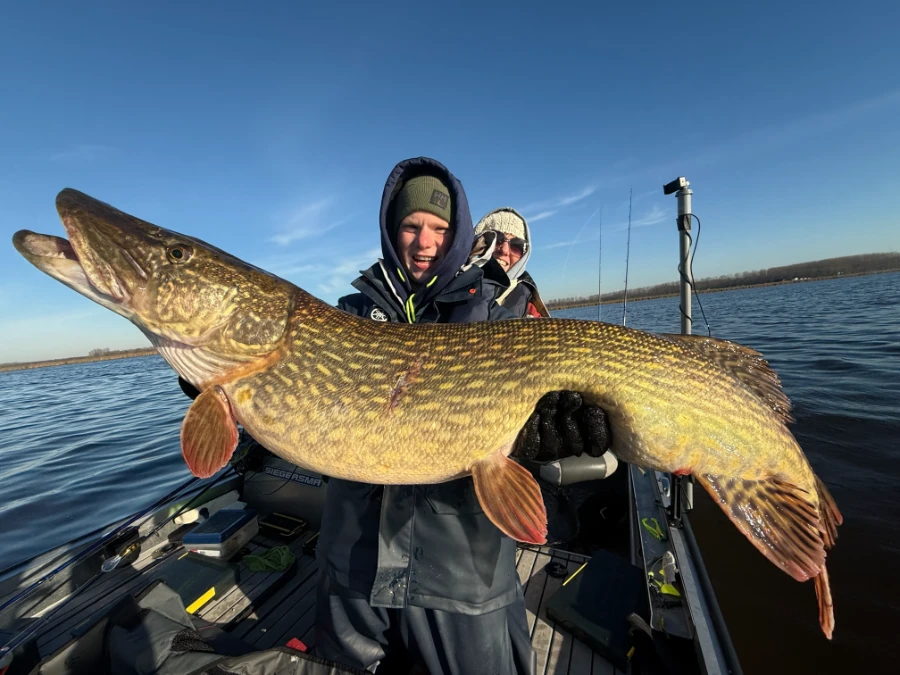
Activity patterns
Northern pike feed consistently throughout the day, with peaks at dawn and dusk. Muskie are far more unpredictable—they may feed heavily for a short window, then go dormant for days. This makes them notoriously difficult to pattern.
The core distinction: European northern pike are opportunistic survivors built for abundance. Muskie are low-density apex predators with a fundamentally different playbook.
6. Growth, age, and reproduction
Growth rates
Northern pike grow quickly in their first few years, especially in prey-rich environments like Dutch waters. A 3-year-old pike in The Netherlands can easily reach 24 inches. Muskie grow more slowly initially but continue growing longer into adulthood, eventually surpassing pike in maximum size.
Lifespan
Northern pike typically live 10 to 15 years, though European specimens in ideal conditions can reach 20+. Muskie regularly live 20 to 30 years, with their slower metabolism contributing to extended longevity.
Spawning behavior
Both species spawn in early spring in shallow, weedy areas. Northern pike spawn first, often in water barely deep enough to cover their backs. Muskie spawn slightly later and require specific habitat. Pike produce 20,000 to 30,000 eggs per female; muskie produce similar numbers, but survival rates are lower.
Why muskie populations are more vulnerable
Muskie juveniles face intense predation—including from northern pike. Combined with their low natural density, habitat loss, and fishing pressure, muskie populations recover slowly from disturbance. This is why catch-and-release is critical for muskie, while northern pike populations can sustain moderate harvest in healthy systems like those around Amsterdam.
7. Implications for sport anglers
Understanding the biology is one thing—applying it on the water is another. Whether you’re fishing for European northern pike in Amsterdam, American northern pike back home, or chasing muskie in Wisconsin, the species differences demand different approaches.
European vs American northern pike: same species, different tactics
Even though you’re targeting the same species, fishing for northern pike in The Netherlands requires some adjustments if you’re coming from North America. Our pike are bigger, heavier, and more aggressive due to the abundant prey and longer feeding seasons. This is why we upsize our tackle. Lures that would seem oversized in Minnesota are perfectly matched to the girth and appetite of a Dutch pike. I regularly guide clients using swimbaits, spinnerbaits, and crankbaits in the 6- to 10-inch range, and our pike hammer them.
American northern pike, facing longer winters and leaner prey, tend to be more size-selective and sometimes less aggressive outside peak feeding windows. The techniques overlap, but European pike are more forgiving of bold presentations.
Basically muskie baits are just great Amsterdam pike baits.
Why pike techniques do not translate directly to muskie
This is where many anglers go wrong. They assume muskie fishing is just pike fishing with bigger gear. It’s not. Muskie require patience, persistence, and a completely different mindset. You might cast for hours—sometimes days—without a strike. When a muskie does show interest, it often follows without committing, requiring figure-8s, pauses, and precise boat positioning to trigger a strike.
Northern pike, especially in Dutch waters, are far more reactive. If a pike is present and feeding, you’ll usually know within a few casts.
Lure selection
For European northern pike: focus on flash, vibration, and size. Spinnerbaits, jerkbaits, swimbaits, and topwater lures all produce. Color matters less than action and profile. But no worries about these matters: I got it all covered for you!
For muskie: larger lures (8 to 14 inches), slower retrieves, and commitment to covering water. Bucktails, glide baits, and oversized crankbaits dominate. Muskie anglers often say “big baits, big fish”—and they mean it.
Expectation management
If you’re visiting Amsterdam to fish for northern pike, expect action. Multiple fish per session is normal in productive waters. If you’re muskie fishing, one fish per trip is a success. Ten hours per fish is a commonly cited average—and that’s in good habitat with experienced anglers.
The biology dictates the experience. Adjust your expectations and strategies accordingly.
8. Common misconceptions
“Muskie is just a bigger pike”
No. Muskie are a separate species with different biology, behavior, and ecological roles. They’re not pike that grew larger—they’re fundamentally different fish that happen to share a genus.
“European pike can reach the same age as muskie”
Rarely. While exceptional European pike might reach 20+ years, muskie routinely live 25 to 30 years due to slower metabolism and lower energy expenditure.
“More lures and faster retrieves equal more muskie”
The opposite is often true. Muskie require patience, methodical presentations, and precise timing. Throwing everything in the tackle box won’t trigger a fish that isn’t ready to feed. Northern pike, especially in Dutch waters, are far more responsive to aggressive, varied approaches.
“Pike and muskie can hybridize freely”
They can hybridize (producing “tiger muskie”), but it’s rare in nature and usually occurs in stocked environments. The hybrids are typically sterile.
“All big Esox in Europe are northern pike”
Correct—there are no native muskie in Europe. Any massive fish you encounter in Amsterdam or elsewhere in The Netherlands is a northern pike, possibly of world-record caliber.
9. Conclusion – three species, three strategies
European northern pike, American northern pike, and muskie may all belong to the Esox genus, but they demand respect for their differences—not assumptions based on surface similarities.
European and American northern pike are the same species shaped by vastly different environments. Here in The Netherlands, abundant prey, mild winters, and healthy ecosystems produce some of the largest, heaviest pike on the planet. If you’re visiting Amsterdam with plans to fish, you’re targeting world-class specimens in waters that consistently deliver both size and action.
Muskie are not oversized pike—they’re a distinct species with specialized biology, lower densities, and behaviors that require entirely different angling strategies. Patience, precision, and respect for their vulnerability define the muskie game.
Understanding these distinctions doesn’t just make you a more effective angler—it deepens your connection to the fish, the water, and the ecosystems that sustain them. Whether you’re casting into an Amsterdam canal, a Minnesota lake, or a Wisconsin flowage, let the biology guide your approach. The fish will tell you everything you need to know—if you’re willing to listen.
10. Sources and literature
To ensure accuracy and credibility, this article draws on peer-reviewed research, government fisheries data, and established scientific literature on Esox species biology and ecology.
Peer-reviewed scientific papers:
- Craig, J.F. (Ed.). (1996). Pike: Biology and Exploitation. Chapman & Hall, London.
- Casselman, J.M. & Lewis, C.A. (1996). Habitat requirements of northern pike (Esox lucius). Canadian Journal of Fisheries and Aquatic Sciences, 53(S1), 161-174.
- Headrick, M.R. & Carline, R.F. (1993). Restricted summer habitat and growth of northern pike in two southern Ohio impoundments. Transactions of the American Fisheries Society, 122(2), 228-236.
- Crossman, E.J. (1986). The noble muskellunge: a review. American Fisheries Society Special Publication, 15, 1-20.
Government fisheries agencies:
- Wisconsin Department of Natural Resources – Muskellunge management and research publications
- Minnesota Department of Natural Resources – Northern pike biology and management
- Ontario Ministry of Natural Resources and Forestry – Esox species studies
- Sportvisserij Nederland – Pike research and population assessments in Dutch waters
Universities and research institutions:
- University of Wisconsin–Stevens Point – Northern Aquaculture Demonstration Facility (muskie research)
- Wageningen University & Research – Freshwater fish ecology in The Netherlands
- Swedish University of Agricultural Sciences – Pike population dynamics
Fisheries biology references:
- Kerr, S.J. (2011). Distribution and Management of Muskellunge in North America: An Overview. Fisheries Policy Section, Ontario Ministry of Natural Resources, Peterborough, Ontario.
- Van Zwieten, P.A.M., Broers, J., & Kroes, M. (1996). Pike (Esox lucius L.) in Dutch inland waters: population dynamics and fisheries management. RIVO-DLO Report.
Field observations and practical experience:
- Fishing Guide Juul – multi-year guiding experience in Amsterdam canals, polders, and surrounding Dutch waters; direct observation of European northern pike behavior,
Recent Comments