
After years of guiding anglers through the waters of Amsterdam, fishing guide Juul has noticed one thing again and again: American guests are always curious about the zander (Sander lucioperca) — the European cousin of their beloved walleye (Sander vitreus). In this in-depth article, he dives into the key differences (and surprising similarities) between these two iconic predators that continue to captivate anglers on both sides of the Atlantic.
And if you’re interested in the difference between the American muskie and the (European and American) Northern pike, make sure to read this article too.
Text: Juul Steyn Photography: Juul Steyn, Patrick Gingras, Justin Maat
1. Introduction – Same Family, Different Fish
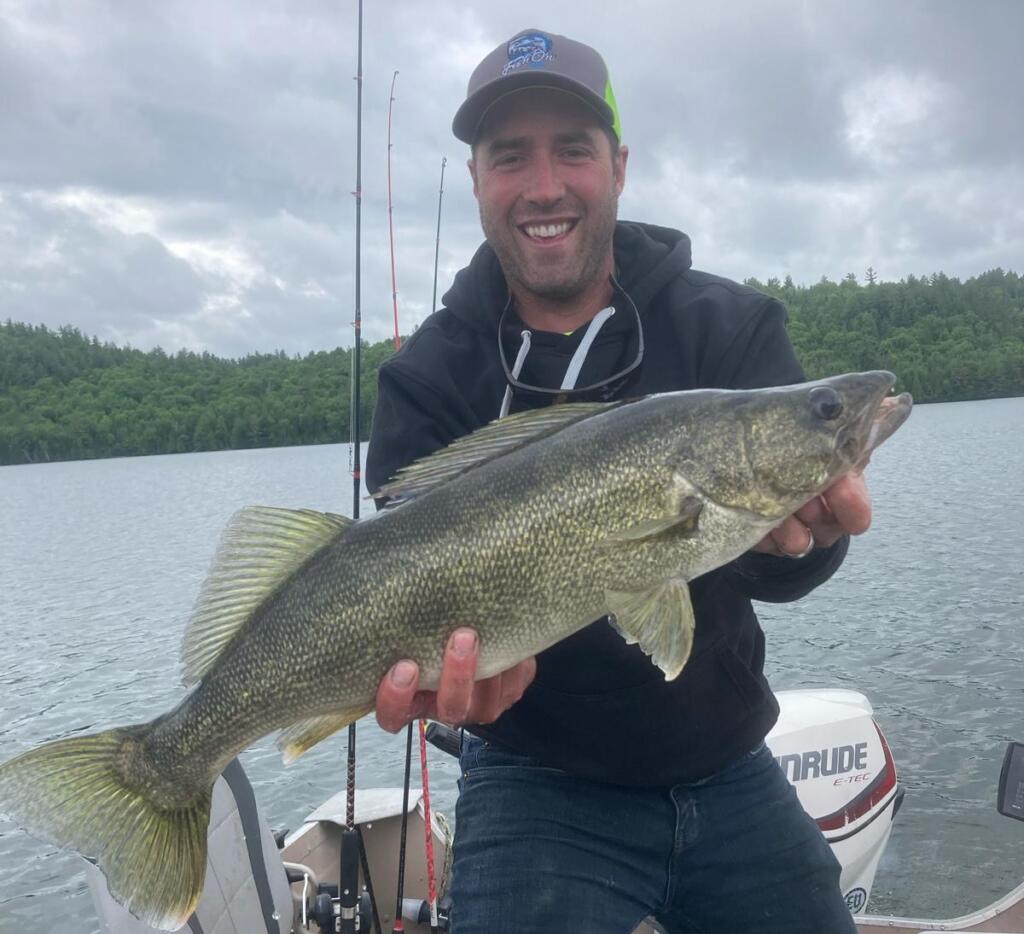
If you’re a walleye angler from the United States, and you do some research about fishing in Europe, you’ll recognize the zander immediately. The silhouette is familiar. The glowing eye. The way it holds tight to structure in low light. The aggressive take on a jig worked near bottom. They feel like the same fish—and in casual conversation, most anglers treat them that way. “European walleye,” they’ll say, or “basically a zander with different spots.”
But here’s the problem: they’re not the same fish. Yes, both are Sander species. Yes, both are apex sight-feeders in turbid water. Yes, they share enough biology that tactics sometimes overlap. But the zander evolved in the sprawling river deltas and brackish bays of Europe. The walleye developed in cold, clear glacial lakes and boulder-strewn rivers of post-ice-age North America. These aren’t cosmetic differences—they’re the result of millions of years of divergent evolution in fundamentally different environments. And if you fish for both species seriously, you’ll notice the gaps. Zander tolerate warmer water and brackish conditions. Walleye are more structure-dependent and temperature-sensitive. Zander grow faster but live shorter lives. Walleye spawn earlier and hold tighter to specific depth ranges. This article breaks down why those differences exist, what they mean biologically, and how they change the way you should fish for each one.
2. Taxonomy and Evolutionary History – Shared Genus, Separate Continents
Both species sit in the genus Sander, part of the Percidae family that also includes yellow perch and the tiny darters of North American streams. Walleye—Sander vitreus—range from the Great Lakes through the Hudson Bay drainage and south into the Missouri and upper Mississippi systems. Zander—Sander lucioperca—dominate huge swaths of Europe, from the big river delta in The Netherlands through the Danube, Volga, and Baltic drainages, and they’ve adapted to brackish water in coastal lagoons where walleye would struggle.
The genus likely originated in Eurasia, with zander representing the older lineage. Phylogenetic research suggests that North American Sander species—walleye and the smaller sauger—split off during the Pleistocene, probably via ancient land bridges across Beringia. That divergence happened roughly 5–10 million years ago, long enough for meaningful genetic and behavioral separation. Modern systematic work confirmed decades ago that Sander forms its own evolutionary branch, distinct from pike-perches in Asia despite surface-level similarities. So while walleye and zander are sister species, they’ve been living separate lives for a very long time—long enough that the differences now run deeper than most anglers realize.
3. Morphology and Sensory Adaptation – Body Shape, Eye Structure and Lateral Line Sensitivity
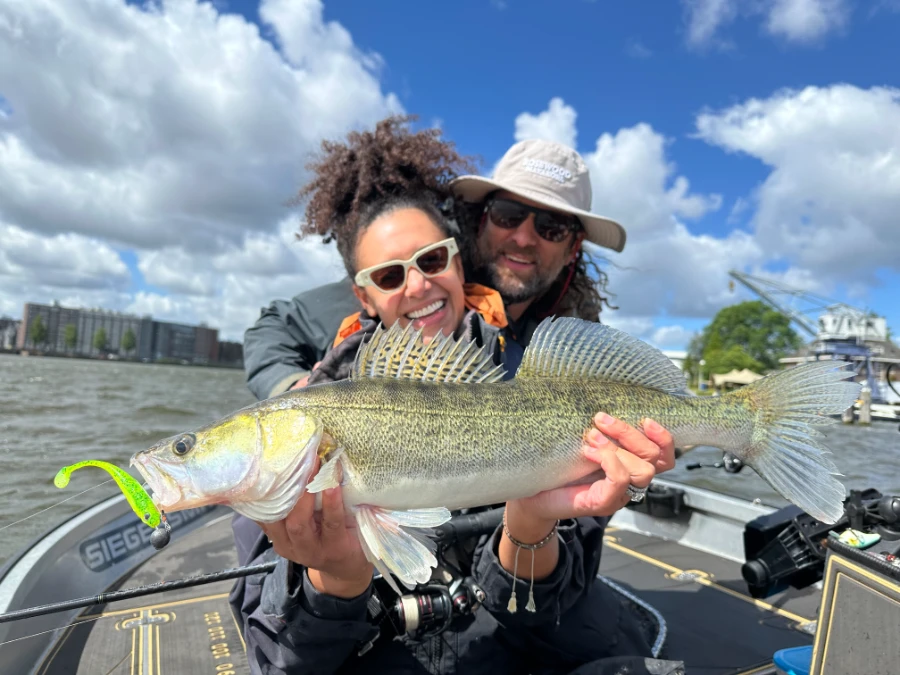
At first glance, zander and walleye look nearly identical. But place them side by side and the differences become clear—and they matter more than aesthetics suggest.
Eye Structure and Low-Light Vision
Both species possess a tapetum lucidum, the reflective layer behind the retina that gives their eyes that eerie glow and allows them to hunt effectively in darkness or turbid water. This adaptation amplifies available light, giving both fish a decisive predatory advantage during dawn, dusk, and night. But walleye eyes are proportionally larger relative to body size, particularly in northern populations adapted to deep, dark glacial lakes. Zander eyes are slightly smaller on average, but their vision is optimized for the green-shifted, tannic-stained water of lowland European rivers. This isn’t splitting hairs—it influences when and where each species feeds most aggressively. Walleye are more crepuscular by necessity. Zander hunt confidently throughout the day in colored water.
Body Depth and Hydrodynamics
Walleye tend to be deeper-bodied, especially mature females, with a more compressed lateral profile. Zander are more streamlined and elongated, built for sustained cruising in current. Research has shown that walleye morphology reflects adaptation to structured environments—rocky reefs, weed edges, and drop-offs where ambush efficiency trumps endurance. Zander, by contrast, evolved in expansive river systems where covering distance and holding position in flow were selectively advantageous. The result: zander are slightly faster swimmers over distance; walleye are better at explosive short bursts from cover.
Dentition and Feeding Mechanics
Both have canine teeth, but zander dentition is more pronounced, with longer, sharper fangs designed for gripping slippery prey like smelt and roach in open water. Walleye teeth are effective but less extreme, suited to a diet that includes more bottom-oriented prey—crayfish, sculpins, and slower-moving forage. These differences reflect hunting strategy: zander are more pelagic and pursuit-oriented; walleye are more ambush-dependent.
Lateral Line Sensitivity
Both species rely heavily on their lateral line to detect vibration and pressure changes, particularly in low-visibility conditions. But walleye appear more sensitive to high-frequency vibrations—likely an adaptation to detecting crayfish movement and substrate disturbance in rocky habitat. Zander respond strongly to broader, lower-frequency pulses consistent with baitfish movement in open water. This has direct tactical implications: walleye respond better to tight, rattling jigs and aggressive bottom contact. Zander prefer smoother, gliding presentations with steady vibration.
| Feature | Walleye (S. vitreus) | Zander (S. lucioperca) |
| Eye size (relative) | Larger | Moderate |
| Body profile | Deep, compressed | Streamlined, elongated |
| Dentition | Moderate canines | Pronounced fangs |
| Preferred hunting style | Ambush, structure-bound | Pursuit, open-water |
| Vibration preference | High-frequency, erratic | Low-frequency, steady |
4. Native Habitat and Water Type – Rivers, Reservoirs and Natural Lakes
The environments that shaped these fish are as different as the continents they occupy—and understanding those differences explains much of their behavior.
Zander: Continental Rivers and Eutrophic Basins
Zander evolved in the large, slow-moving river systems of Central and Eastern Europe—the Danube, Elbe, Oder, Volga—and the vast, shallow lakes connected to them. These are eutrophic systems: nutrient-rich, algae-laden, often turbid year-round. Water clarity in prime zander habitat averages 0.5 to 2 meters, occasionally less. These are exactly the conditions you’ll find when fishing for zander in Amsterdam. Studies have documented that zander thrive in Finnish and Baltic lakes where visibility rarely exceeds one meter, and they’ve adapted to brackish conditions in coastal lagoons where salinity can reach 8–12 ppt. These are warm, fertile, productive waters with long growing seasons and abundant coarse fish populations—bream, roach, ruffe. Zander don’t need crystal-clear water. In fact, they often avoid it. Research has shown that zander distribution correlates strongly with turbidity and temperature, favoring systems where summer temps reach 20–24°C and where visual ambush predators like pike struggle.
The zander’s world is one of both hard and soft bottoms, sparse structure, and open water. They cruise and suspend half water, and more often than not, just lay on the bottom, waiting for an easy meal. They relate to temperature and oxygen gradients more than physical features. In rivers, they hold in slackwater behind pilings, in eddies, and along channel edges—but they’re rarely locked to one spot the way a walleye might be.
Walleye: Glacial Lakes and Structured Systems
Walleye, by contrast, are creatures of the North American glacial belt. They evolved in cold, clear lakes carved by retreating ice sheets 10,000–15,000 years ago—systems like Mille Lacs, Lake Erie’s central basin, Lake Winnipeg, and countless northern shield lakes. The archetypical walleye lake has been described as mesotrophic to oligotrophic, with moderate clarity (2–4 meters in summer, often much better in spring and fall), defined structure—rock reefs, gravel bars, weed edges—and a forage base heavy on yellow perch, ciscoes, and emerald shiners. Walleye also adapted to large river systems like the Mississippi and reservoirs across the central U.S., but their behavioral template is rooted in structured, relatively clear environments.
Water temperature matters intensely to walleye. They’re cold-water specialists, preferring 15–20°C and avoiding sustained exposure above 24°C. Research has emphasized that walleye are less tolerant of eutrophication and low oxygen than zander, and they struggle in systems dominated by soft substrate and lack of hard structure.
The Clarity Divide
This is the critical point: zander are built for poor visibility; walleye are built for moderate visibility with structure. Zander don’t need to see far—they need to detect movement in a murky environment and strike fast. Walleye rely on slightly better visibility to pick out targets against complex backgrounds. That difference drives everything from lure choice to retrieve speed to time of day. It’s not that one species is more adaptable—it’s that they’re adapted to fundamentally different problems.
5. Forage Base and Feeding Ecology – What They Eat and Why It Matters
Both species are opportunistic piscivores, but the prey communities they evolved with have shaped their feeding behavior in subtle and important ways.
Zander: High-Volume, Moderate-Energy Forage
In their native European systems, zander feed primarily on cyprinids and clupeids—roach (Rutilus rutilus), bleak (Alburnus alburnus), bream, ruffe, and in northern regions, Baltic smelt (Osmerus eperlanus). Dietary studies have analyzed zander stomach contents across multiple Hungarian and Austrian waters and found that roach and bleak dominated diets by volume, often constituting 60–80% of prey items. These are soft-rayed, relatively low-energy fish compared to North American forage. In Baltic coastal systems, research has documented that zander shift heavily to smelt during spring and summer migrations, tracking massive schools in open water. And that’s what the zander in Amsterdam do as well: follow the smelt.
The key pattern: zander are volume feeders. They consume large numbers of smaller, schooling fish rather than targeting fewer, high-value prey. Juvenile perch are also a staple, particularly in lakes where perch populations boom. This forage strategy favors active hunting, covering water, and exploiting transient concentrations of baitfish. Zander don’t sit and wait—they search.
Walleye: Energy-Dense, Structured Forage
Walleye evolved around a different menu. Yellow perch (Perca flavescens), emerald shiners (Notropis atherinoides), gizzard and threadfin shad (Dorosoma spp.), ciscoes (Coregonus spp.), and in some systems, sculpin and darters. Research in Lake Erie has shown that walleye exhibited strong selectivity for age-1 and age-2 perch when available, even when smaller prey were more abundant. Perch, shad, and ciscoes are energy-dense, especially during pre-spawn conditioning. This creates a different optimization problem: walleye benefit from waiting in high-probability ambush zones rather than cruising for scattered prey.
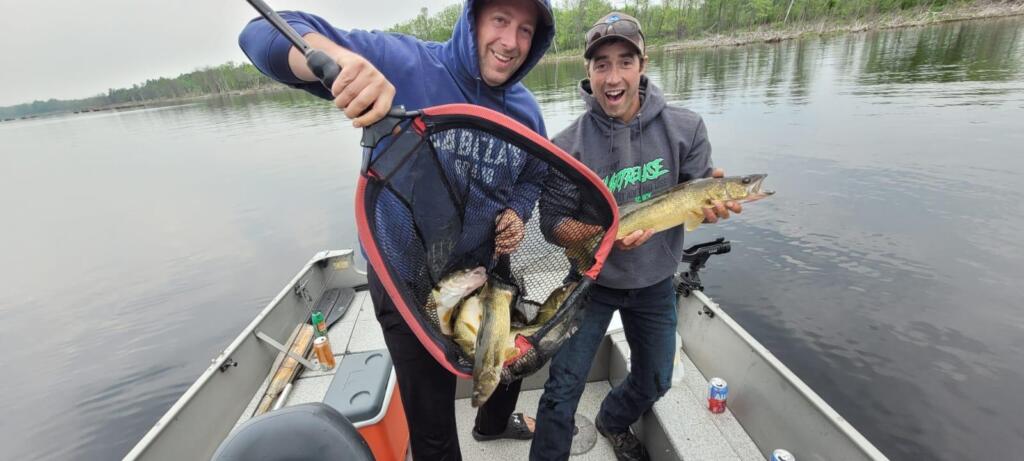
The walleye’s world is one where prey are often tied to structure—perch around rocks and weeds, shiners along current seams, ciscoes suspended over basins at specific depths. This makes location more predictable but requires patience and positional discipline.
Tactical Implications
These differences matter on the water. Zander respond to search-style fishing—covering expansive flats, drifting open water, working river channels with mobile presentations. Walleye require pinpoint structure fishing, working the same reef or weed edge repeatedly, and matching depth to forage location. It’s not that zander won’t hold to structure—they will. But their default mode is movement. The walleye’s default mode is ambush.
6. Seasonal Behavior Comparison – Winter, Pre-Spawn, Spawn and Summer Patterns
Seasonal movements and feeding windows differ significantly between these species, driven by temperature physiology, spawning biology, and the ecosystems they evolved to exploit.
Winter: Ice vs. Flow
Walleye in northern systems spend much of the winter under ice, where water temperatures stabilize near 0–4°C and daylight is filtered through snow and ice cover. Metabolism slows dramatically. Research has documented that walleye feeding activity drops sharply below 5°C, and fish often suspend or hold tight to deep structure with minimal movement. They’re catchable, but windows are narrow—typically around dawn, dusk, or during brief midday light penetration. In reservoirs and southern systems without ice, walleye remain more active but still favor deeper, stable thermal zones.
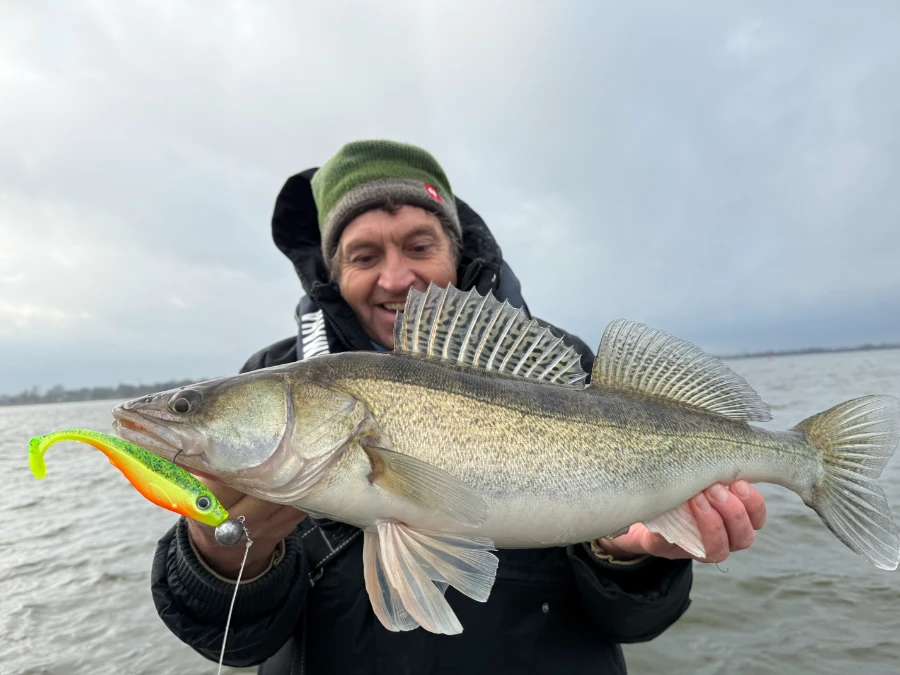
Zander, by contrast, are adapted to milder European winters where most systems remain ice-free. Water temperatures in the 2–8°C range are common, and zander continue feeding actively throughout winter, particularly in rivers and estuarine zones where current and salinity provide thermal buffering. Studies have found that zander in Finnish lakes reduced activity under ice but never entered the prolonged dormancy seen in walleye. In Western and Central European rivers, just like the river IJ and surrounding waters in Amsterdam, zander winter fishing is productive. Fish hold in deep channels and slack water but feed opportunistically when conditions align.
Pre-Spawn: Staging and Migration
Both species stage near spawning habitat as water warms in early spring, but timing and temperature cues differ. Walleye begin moving toward shallow gravel or rubble reefs when water reaches 4–6°C, often migrating into tributary streams or windswept shorelines. Research has documented that these pre-spawn movements can cover significant distances—20–50 km in large lake systems—and fish concentrate in predictable staging areas for 2–4 weeks before actual spawning. This creates exceptional fishing opportunities but requires understanding specific lake or river geography.
Zander stage later and more diffusely. They move toward spawning sites when temperatures reach 6–8°C, favoring shallow bays, flooded vegetation, and soft-bottom areas with submerged roots or structure. Because zander spawn in a wider range of substrates—not just clean gravel—they don’t concentrate as tightly as walleye during pre-spawn. Research has noted that zander staging is more protracted and less predictable, with fish trickling into spawning zones over several weeks rather than massing in discrete locations.
Spawn: Temperature and Substrate
Walleye spawn at 6–10°C, typically in April or May depending on latitude, over clean gravel, cobble, or rubble in current or wind-exposed areas. Males arrive first, females deposit eggs in shallow water (0.5–3 meters), and no parental care follows. Studies have emphasized that walleye require well-oxygenated, silt-free substrate for successful egg incubation—any sediment deposition can devastate year-class strength.
Zander spawn slightly warmer, at 8–12°C, usually in late April through June. Males prepare and guard nests in shallow areas with submerged roots, vegetation, or debris. Research has documented active nest defense and fanning behavior, a degree of parental investment walleye lack entirely. This allows zander to spawn successfully in softer, more eutrophic systems where walleye would fail.
Summer: Pelagic vs. Structure
Post-spawn, the patterns diverge sharply. Walleye in clear lakes and reservoirs become highly structure-dependent, relating to rock piles, weed edges, and specific depth contours (typically 4–8 meters) where temperature and forage overlap. They’re catchable all summer but require precise location and depth control.
Zander often shift pelagic in summer, suspending in open water and tracking baitfish schools. In large European lakes and rivers, zander may abandon structure entirely during warm months (20–24°C), feeding in midwater or near the surface during low-light periods. This behavior frustrates anglers expecting them to behave like walleye—but it’s a logical response to the open-water forage base and tolerance for warmer, less oxygenated conditions.
7. Light Sensitivity and Feeding Windows – Low-Light Specialists, But Not Identical
Both species are famously crepuscular—most active during dawn, dusk, and nighttime hours—but the reasons and intensity of this behavior differ based on the water they evolved in.
The Tapetum Advantage
As discussed earlier, both walleye and zander possess a tapetum lucidum that amplifies ambient light, giving them a decisive visual advantage over prey in low-light conditions. This adaptation allows effective hunting at light levels where most other predators are functionally blind. But the degree to which each species requires low light varies with water clarity.
Walleye: Light-Sensitive in Clear Water
In the relatively clear lakes and reservoirs where walleye evolved, daytime light penetration is significant. Studies have found that walleye in clear northern lakes exhibited strong diel patterns, with feeding concentrated in the first and last two hours of daylight and again after dark. Midday feeding dropped sharply, particularly in summer when light penetration was highest. This isn’t just preference—it’s competitive advantage. Walleye can see better than their prey in dim conditions, but in full daylight, that advantage narrows. The result: walleye in clear water are genuinely crepuscular and often difficult to catch during bright midday periods unless they’re holding very deep or under heavy cover.
Moon phase effects are frequently discussed among walleye anglers, though the evidence is mixed. Bright, full-moon nights may extend feeding windows or shift peak activity entirely to darkness, but results vary by system and are difficult to isolate from other variables like weather and forage availability.
Zander: Comfortable in the Murk
Zander, adapted to perpetually turbid water, are far less constrained by daylight. In rivers and eutrophic lakes where visibility is limited year-round, as found in and around Amsterdam, zander feed aggressively throughout the day—especially during overcast conditions or after rain increases turbidity. Their advantage isn’t diminished by sunlight because their prey can’t see well regardless. Research has noted that while zander still show preference for low-light periods, they’re opportunistic daytime feeders in colored water, particularly when tracking active baitfish schools.
Tactical Reality
Walleye demand precise timing in clear water—first light, last light, night. Zander offer all-day opportunity in turbid systems but still peak during crepuscular windows. If you’re fishing clear water for either species, plan your day around the edges. If you’re fishing stained or turbid water for zander, don’t pack up at noon.
Angling Implications – Where Techniques Cross Over
The biological and behavioral differences outlined above aren’t academic—they translate directly to what works on the water. Some tactics cross over seamlessly. Others fail completely if you assume interchangeability—and that’s something I encounter on a daily basis when fishing with American anglers.
Jig Weight Selection
Both species respond to vertical jigging, but optimal jig weight differs based on feeding behavior and water type. Walleye in structured environments—rock reefs, weed edges, defined drop-offs—benefit from heavier jigs (10–20 grams) that maintain bottom contact and produce sharp, erratic movement on the lift. The goal is to trigger reaction strikes from fish holding tight to cover, often in current or wind. Bottom contact matters—it creates noise, vibration, and visual contrast against structure.
Zander in open-water or soft-bottom systems respond better to moderate weights (7–14 grams) that allow slower, more horizontal presentations. In rivers, zander often suspend or cruise just off bottom in the water column, and a jig that falls too fast or pounds bottom repeatedly can actually reduce strikes. In heavily pressured European systems—particularly urban canals and popular river stretches in Amsterdam—zander can become conditioned to avoid aggressive, high-impact presentations. A 10-gram jig on a slow, sweeping retrieve often outperforms a 20-gram jig fished vertically in the same spot. And be assured that I have some more cards up my sleeve to trick these smarter fish into biting.
Drift Speed Control
Drift speed is where the morphological differences between species become tactically relevant. Walleye, with their deeper body profile and ambush-oriented behavior, tolerate slower drifts and even stationary presentations over structure. A controlled drift at 0.3–0.6 km/h allows precise placement over specific features—rock piles, inside turns, weed pockets—and gives fish time to commit. In reservoirs and large lakes, dragging a jig or livebait rig at near-stationary speed along contour lines is a proven walleye method.
Zander, built for sustained swimming and adapted to current, often prefer faster drifts—0.8–1.2 km/h or more—that cover water and mimic the movement patterns of schooling forage. In rivers, working downstream with the current and maintaining a steady, gliding retrieve triggers more strikes than stop-and-go jigging. This isn’t universal—zander will absolutely hit stationary baits—but the strike rate consistently improves when the lure maintains forward momentum, especially during active feeding periods.
Line Diameter Strategy
Walleye in clear water are notoriously line-shy. Fluorocarbon leaders in the 0.25–0.30 mm range (roughly 6–8 lb test) are standard in pressured lakes, particularly during post-frontal conditions when fish are neutral or negative. Braid-to-fluoro setups allow sensitivity while minimizing visibility, and in gin-clear northern shield lakes, even 0.30 mm can spook fish during midday periods. No worries about that in Amsterdam – we have nice dark water all year round.
Zander, operating in turbid water with lower visibility, are less leader-sensitive. In most European river systems, 0.35–0.40 mm fluorocarbon or even straight braid (0.15–0.18 mm) produces no noticeable reduction in strikes. The exception is heavily pressured urban waters—Amsterdam canals, Berlin’s Havel system—where zander see constant angling pressure and begin exhibiting walleye-like caution. In those environments, downsizing to 0.28–0.30 mm can make a measurable difference. And that’s what you will see me using in Amsterdam: a 0.10 mm braid with 2 m 0.28 mm fluocarbon leader.
Vibration vs Subtle Presentation
This goes back to lateral line sensitivity and prey type. Walleye respond strongly to high-frequency vibration—rattle chambers in jig heads, aggressive blade baits, tight-wobbling crankbaits. The vibration mimics crayfish movement, fleeing baitfish, and distressed prey. In stained water or low light, vibration compensates for reduced visibility and triggers reaction strikes.
Zander prefer lower-frequency, steadier vibration. Paddletail soft plastics with a slow, throbbing action outperform aggressive rattling jigs in most conditions. Shad-style swimbaits in the 10–15 cm range, retrieved with minimal rod input, produce consistent results. The retrieve should feel smooth, not erratic. Think glide, not hop. In clear water or when fish are cautious, zander often prefer near-silent presentations—slim minnow profiles with minimal blade or tail action. During the winter I change the paddle tail for a more suble V-tail, to ensure a super finesse presentation when vertical jigging.
Sonar Behavior
Both species are detectable on modern sonar, but their behavior on the screen reflects their ecological differences. Walleye appear as distinct marks tight to bottom or structure, often stacked in groups along specific depth contours. They hold position. If you mark fish at 6 meters on a reef edge and return an hour later, there’s a reasonable chance they’re still there—or nearby.
Zander are more transient. In open water, they appear as scattered marks in midwater and sometimes even near surface, often moving through an area rather than holding. In rivers, they relate to current breaks and channel edges but shift position frequently. Marking zander doesn’t guarantee they’ll be there on the next pass. The exception is during low-light feeding periods or in winter, when zander concentrate in deeper holes and show more stationary behavior similar to walleye.
The practical takeaway: walleye fishing rewards patience and precision on known structure. Zander fishing rewards mobility and water coverage, with less emphasis on returning to the exact same spot.
8. Where European Techniques May Outperform in US Waters
There are specific walleye scenarios where European zander tactics—developed under intense angling pressure and challenging conditions—offer legitimate advantages. This isn’t about one continent’s methods being superior. It’s about recognizing when techniques evolved for a different species solve similar problems.
High-Pressure Clear-Water Fisheries
Walleye in heavily fished northern lakes—particularly those with catch-and-release tournaments, significant guide pressure, or accessible shoreline structure—begin exhibiting behavior more common in European urban zander fisheries. They become leader-shy, spook easily, and ignore aggressive presentations. In these conditions, the European approach—ultra-light fluorocarbon (0.25–0.28 mm), smaller jig heads (5–8 grams), minimal blade action, and slow horizontal retrieves—can produce strikes when standard walleye tactics fail. This is especially true during post-frontal periods or midday windows when fish are neutral.
The logic is straightforward: if fish are conditioned to avoid heavy jigs, rattles, and fast movement, scaling down and slowing down removes the trigger for avoidance. Zander anglers in places like the Netherlands or Germany’s canal systems have refined these finesse approaches out of necessity—it’s the only way to consistently catch educated fish.
Cold-Water Finesse Scenarios
In early spring or late fall, when walleye metabolism slows and fish hold in deeper water with minimal feeding activity, European-style vertical presentations can outperform traditional Lindy rigs or livebait setups. A small paddletail (8–10 cm) on a light jighead (7–10 grams), worked with minimal rod input and long pauses, mimics the slow, dying movement of cold-stunned baitfish. Zander anglers use this method extensively in winter, and it translates well to lethargic walleye in 4–8°C water.
Clear Northern Reservoirs
In oligotrophic reservoirs with scattered structure and nomadic walleye populations—common in the northern U.S. and Canada—the European strategy of covering water rather than grinding one spot can be more efficient. Drifting large flats, working mid-depth contours with mobile presentations, and searching open water with sonar parallels how zander are targeted in large European lakes like the ‘Randmeren’ near Amsterdam. The key is recognizing when walleye are behaving more like cruising predators than stationary ambushers—and adjusting accordingly.
None of this suggests abandoning proven walleye methods. It suggests recognizing that fish under pressure, in transitional conditions, or in atypical habitat sometimes respond better to techniques developed for a closely related species facing similar challenges.
9. Conclusion – Similar Species, Different Ecological Logic
Zander and walleye are sister species within the genus Sander, sharing a recent common ancestor, similar morphology, and overlapping sensory adaptations. But they are not ecological equivalents. One evolved in the turbid, eutrophic river systems of continental Europe. The other developed in the cold, structured, post-glacial lakes of North America. Those differences—seemingly minor on a map—have produced fish with distinct temperature tolerances, forage strategies, movement patterns, and behavioral responses to pressure.
Walleye are ambush predators optimized for clear to moderately turbid water, tight to structure, with strong crepuscular feeding windows and sensitivity to light and line diameter. Zander are pursuit predators adapted to poor visibility, open water, and warmer temperatures, with more consistent daytime feeding and greater tolerance for finesse or aggressive presentations depending on conditions.
The tactical implications are real. Jig weight, drift speed, retrieve cadence, line choice—these aren’t arbitrary preferences. They’re responses to how each species hunts, where it holds, and what triggers a strike. Anglers who fish for both species—and recognize the ecological logic behind their behavior—catch more fish. Not because they’ve memorized a pattern, but because they understand why the pattern exists in the first place.
Serious angling isn’t about applying universal rules. It’s about reading the biology, the water, and the context—and adjusting accordingly.
References
Ali, M.A. & Anctil, M. (1977). Retinas of Fishes: An Atlas. Springer-Verlag, Berlin.
Billington, N., Barrette, R.J., & Hebert, P.D.N. (1990). Management implications of mitochondrial DNA variation in walleye stocks. Canadian Journal of Fisheries and Aquatic Sciences, 47(3), 576-585.
Colby, P.J., McNicol, R.E., & Ryder, R.A. (1979). Synopsis of biological data on the walleye Stizostedion v. vitreum (Mitchill 1818). FAO Fisheries Synopsis No. 119.
Collette, B.B. & Banarescu, P. (1977). Systematics and zoogeography of the fishes of the family Percidae. Journal of the Fisheries Research Board of Canada, 34(10), 1450-1463.
Craig, J.F. (Ed.). (2000). Percid Fishes: Systematics, Ecology and Exploitation. Blackwell Science, Oxford.
Hartman, K.J. & Margraf, F.J. (1992). Effects of prey and predator abundances on prey consumption and growth of walleyes in western Lake Erie. Transactions of the American Fisheries Society, 121(2), 245-260.
Hokanson, K.E.F. (1977). Temperature requirements of some percids and adaptations to the seasonal temperature cycle. Journal of the Fisheries Research Board of Canada, 34(10), 1524-1550.
Lappalainen, J., Dörner, H., & Wysujack, K. (2003). Reproduction biology of pikeperch (Sander lucioperca (L.))—a review. Ecology of Freshwater Fish, 12(2), 95-106.
Lehtonen, H., Hansson, S., & Winkler, H. (1996). Biology and exploitation of pikeperch, Stizostedion lucioperca (L.), in the Baltic Sea area. Annales Zoologici Fennici, 33(3-4), 525-535.
Lester, N.P., Dextrase, A.J., Kushneriuk, R.S., Rawson, M.R., & Ryan, P.A. (2004). Light and temperature: key factors affecting walleye abundance and production. Transactions of the American Fisheries Society, 133(3), 588-605.
Peltonen, H., Vinni, M., Lappalainen, A., & Pönni, J. (2006). Spatial feeding segregation of herring (Clupea harengus L.) and sprat (Sprattus sprattus L.) in the Gulf of Finland, Baltic Sea. Hydrobiologia, 514(1-3), 151-161.
Ryder, R.A. (1977). Effects of ambient light variations on behavior of yearling, subadult, and adult walleyes (Stizostedion vitreum vitreum). Journal of the Fisheries Research Board of Canada, 34(10), 1481-1491.
Specziár, A. (2010). Fish fauna of Lake Balaton: stock composition, living conditions of fish and nutrient load of the lake. Hydrobiologia, 633(1), 235-249.
Stepien, C.A. & Haponski, A.E. (2015). Taxonomy, distribution and evolution of percid fishes. In: Kestemont, P., Dabrowski, K., & Summerfelt, R.C. (Eds.), Biology and Culture of Percid Fishes. Springer, Dordrecht, pp. 3-60.
Recent Comments