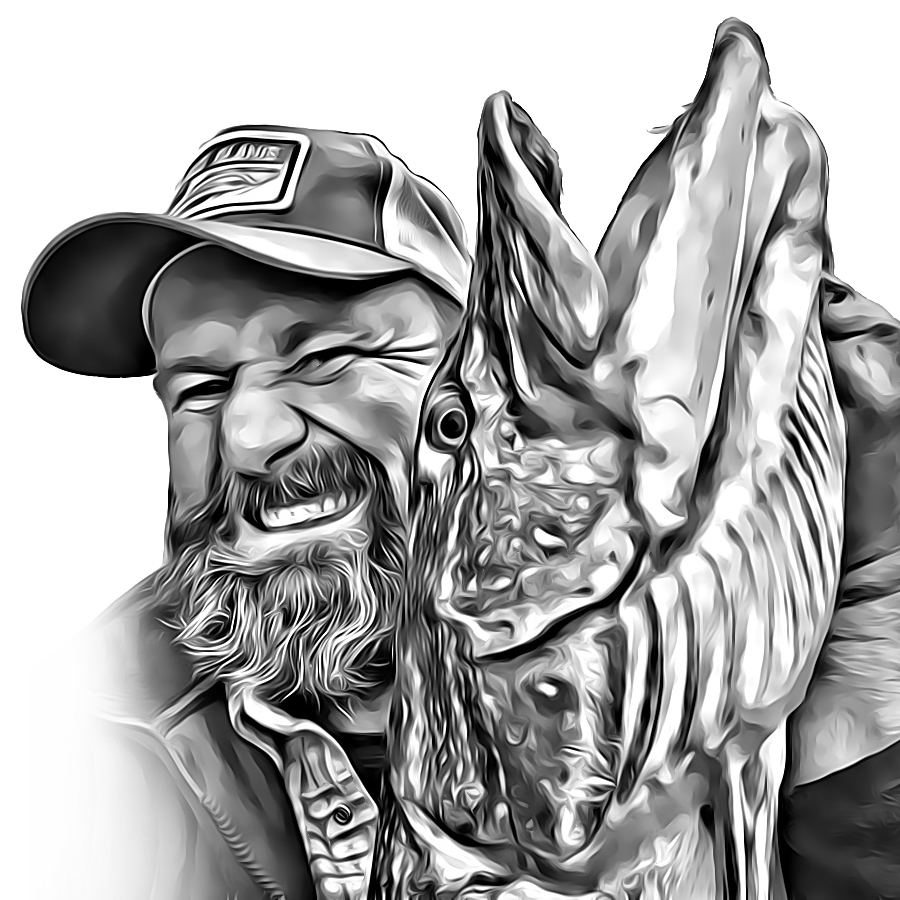
For many international anglers, Amsterdam is synonymous with three species: Zander. Perch. Pike. Those fish have put the city on the global bucket list and enable me to be a fishing guide in my beloved ‘Zanderdam’. Healthy water, heavy structure, lots of fish, and technical urban fishing have created a reputation that stretches from Scandinavia to the United States. But beneath that well-known predator fishery lies something far more unusual.
Text: Juul Steyn
Amsterdam is not just a canal network. It functions as a layered urban estuary, where freshwater from the Amstel meets brackish influence from the North Sea Canal — and where marine, migratory, and freshwater species coexist within a single metropolitan system.
Roughly 65 fish species have been recorded in Amsterdam waters. That is extraordinary for a capital city.
This article looks beyond the usual suspects — beyond zander, perch, pike, bream, roach and a bunch of other regulars — and explores the lesser-known species that quietly prove Amsterdam is one of Europe’s most biologically diverse urban fisheries.
A City Built on a Salinity Gradient
Salt water enters the North Sea Canal through the locks at IJmuiden. Because salt water is denser than freshwater, it can travel inland along the bottom, forming a subtle salinity gradient beneath the surface layer.
The IJ basin becomes a mixing zone. To predators like zander and perch, that gradient may seem irrelevant. To ecologists, it explains everything. It allows flatfish to move inland. It allows marine forage to penetrate the city. It maintains migration corridors for ancient species like lamprey.
Amsterdam’s reputation may be built on predators — but its resilience is built on biodiversity.
The Brackish Specialists: Proof of Marine Connectivity
European Flounder (Platichthys flesus)
Maximum length: 60 cm
Likely locations: IJ basin, western harbor zones (Westhaven, Amerikahaven, Afrikahaven)
Why this fish likes Amsterdam: Flounder are flatfish adapted to life in estuaries, and we catch this surprisingly strong fighter quite often – especially when fishing smaller baits on the drop shot. They spawn at sea but regularly migrate into brackish and even freshwater systems.
In Amsterdam, their presence confirms that the IJ is not isolated freshwater. It is ecologically connected to the North Sea.
Flounder feed on benthic invertebrates — worms, crustaceans, mollusks — converting sediment life into higher trophic energy.
Why it matters:
Where flounder persist, bottom oxygen and sediment communities are functioning.
In short:
A city that holds flounder holds a working estuary.
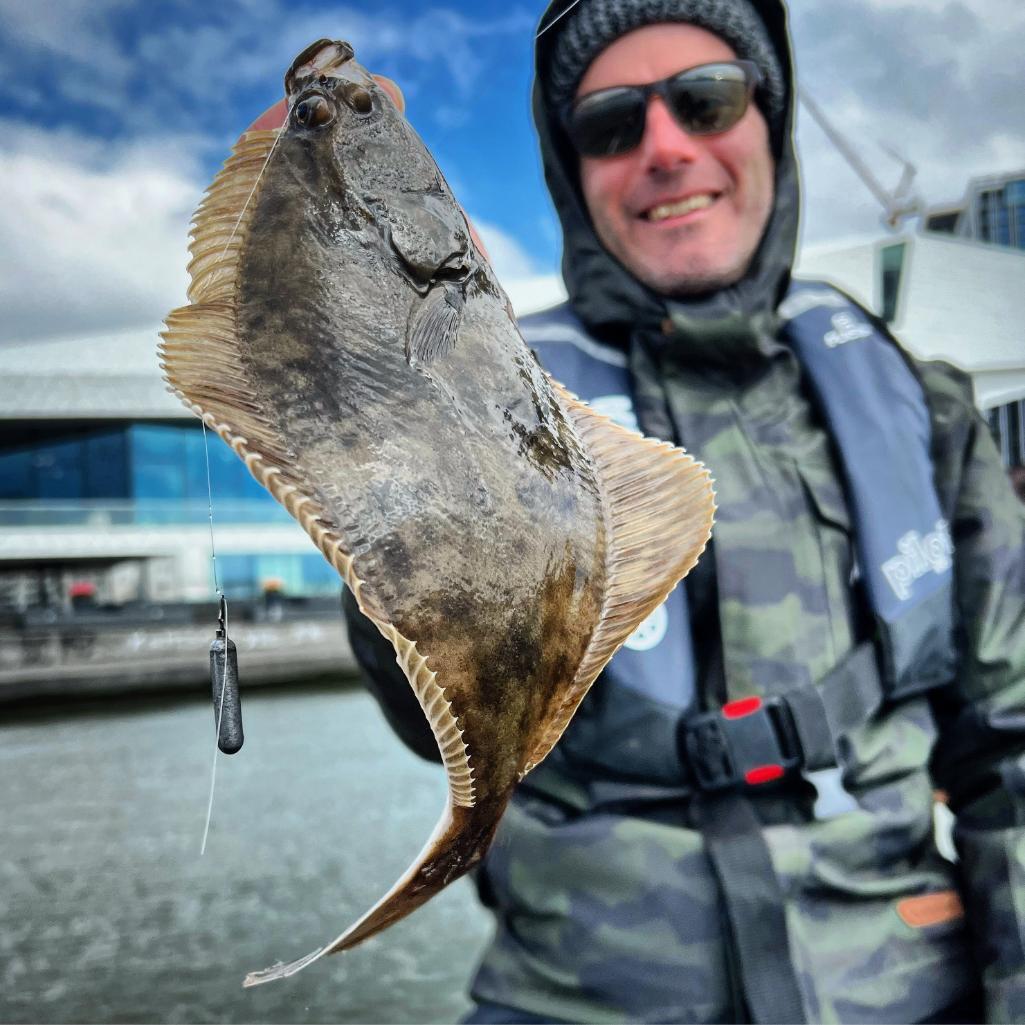
Common Sole (Solea solea)
Maximum length: 70 cm
Likely locations: Deeper brackish harbor zones of the North Sea Canal
Why this fish likes Amsterdam: The sole is another marine flatfish capable of entering brackish systems. It prefers sandy or muddy bottoms and feeds on small benthic invertebrates – exactly what the North Sea Chanel provides.
While less frequently recorded than flounder, its potential presence underscores the same ecological message: Marine influence does not stop at the coastline.
Why it matters:
Sole indicate stable salinity layering and adequate benthic productivity.
In short:
Salt water quietly reaches further inland than most anglers realize.
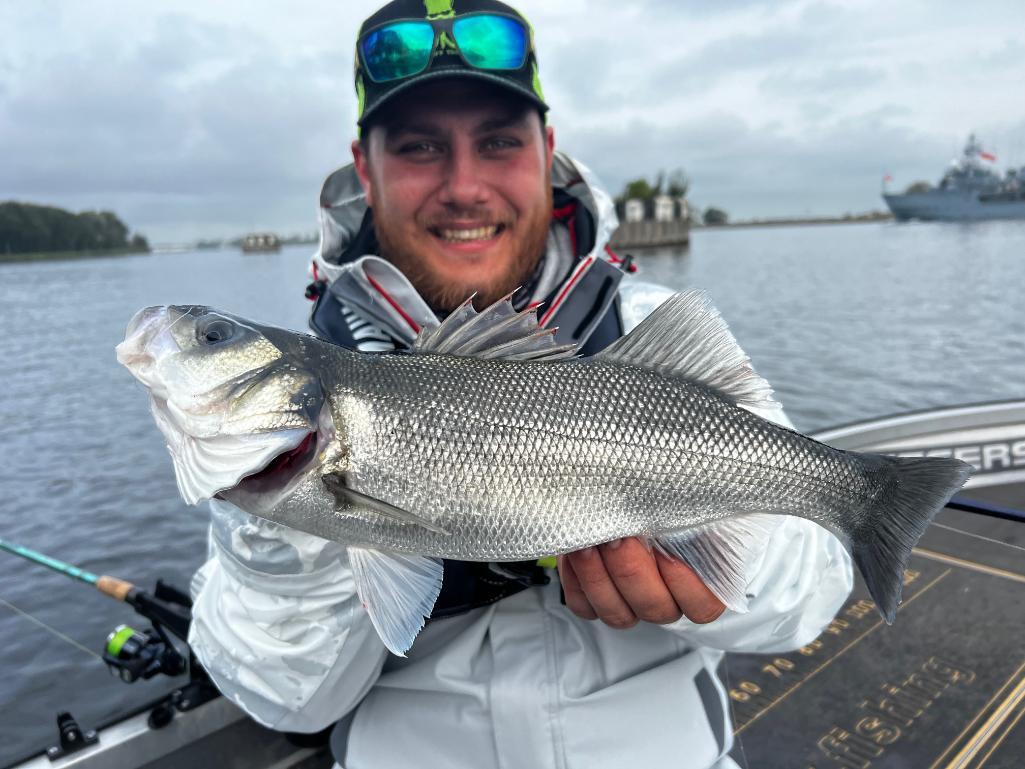
European Seabass (Dicentrarchus labrax)
Maximum length: 100 cm
Likely locations: North Sea Canal corridor, brackish harbor zones west of Amsterdam, occasionally the IJ during periods of stronger marine influence.
We’ve caught quite a few sea bass, especially closer to IJmuiden, where the water is more salty.
Why this fish likes Amsterdam: The European seabass is a marine predator strongly associated with coastal waters, estuaries, and tidal systems. It is highly tolerant of salinity shifts and frequently enters brackish environments to hunt. During periods of stronger marine influence, seabass may move into the North Sea Canal and occasionally push toward the western IJ.
Seabass are visual hunters that rely on clear water and active forage layers, feeding primarily on small fish and crustaceans. Their presence indicates not just connectivity to the North Sea, but a system capable of supporting active pelagic predation within an urban framework.
Ecologically, seabass represent the upper end of the marine-brackish interface. They convert coastal energy into top-level predation inside a metropolitan waterway — a rare phenomenon in European capital cities.
In short:
When seabass hunt in the canal, the sea has entered the city.
Grey Mullets (Chelon ramada and Chelon labrosus)
Maximum length: 70–75 cm
Likely locations: North Sea Canal corridor, IJ west of Central Station.
Over the years, my guests have landed three large mullet on the river IJ — all on small green soft plastics. Most likely, the color and subtle presentation resembled the algae and organic matter they naturally graze on.
Why this fish likes Amsterdam: Mullets are not glamorous sport fish. They are grazers and recyclers.
They feed on algae that grow on the rocks along the shore, as well as on the hulls of houseboats, organic detritus, and suspended matter — effectively transforming waste nutrients into fish biomass.
Their presence signals:
- Oxygen stability
- Active nutrient cycling
- Functioning primary productivity
Why it matters:
Mullets prove the ecosystem is metabolically alive, not stagnant.
In short:
They are the engine room of the brackish food web.
Atlantic Herring (Clupea harengus)
Maximum length: 45 cm
Likely locations: Brackish IJ during seasonal movements
Why this fish likes Amsterdam: Herring are schooling plankton feeders normally associated with open sea systems. When they appear in the IJ, they bring pelagic energy into the city.
Predator species may respond quickly to these forage pulses.
Why it matters:
Herring represent open-water productivity entering an urban environment.
In short:
Amsterdam occasionally becomes part of the North Sea food chain.
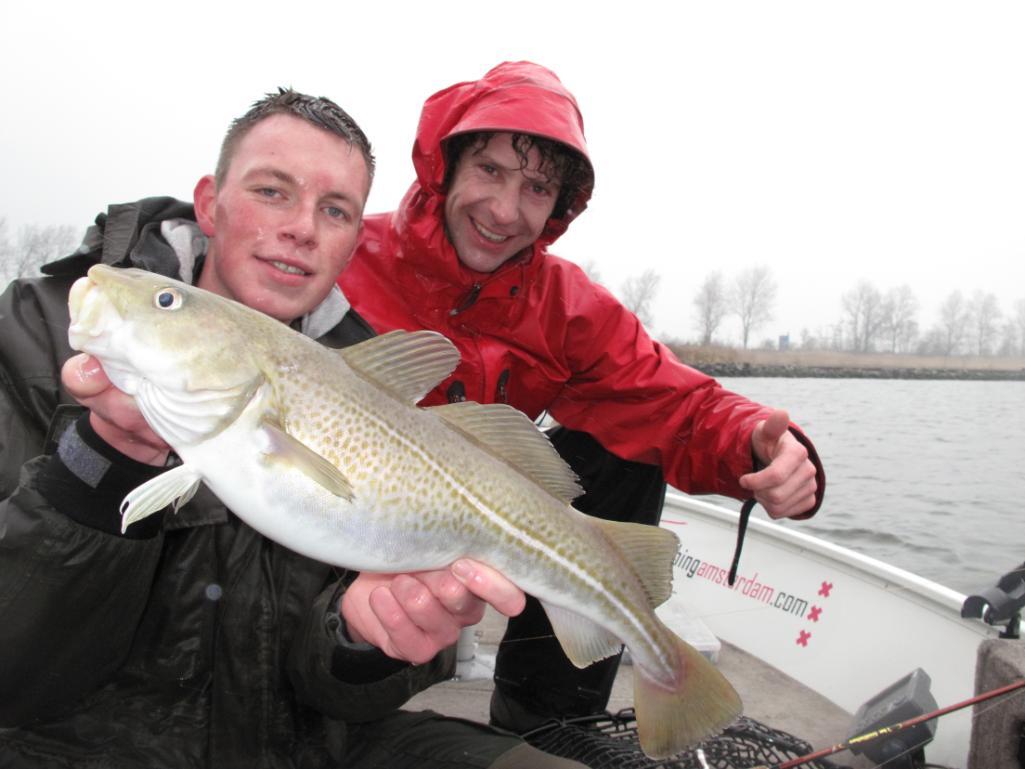
Atlantic Cod (Gadus morhua)
Maximum length: 200 cm
Likely locations: most Western part of North Sea Channel, up to the Afrikahaven
Over the years we have caught around 10 cod up to 5 lb, all close to the sea locks in IJmuiden.
Cod are iconic marine predators.
Why this fish likes Amsterdam: While not residents, occasional penetration into brackish harbor zones during strong marine influence is biologically plausible.
Cod require oxygen-rich, prey-dense environments.
Why it matters:
Even rare records of large marine predators reinforce the reality of ecological openness.
In short:
The city’s aquatic borders are more porous than maps suggest.
The Corridor Species: Migration Still Happens Here
European Smelt (Osmerus eperlanus)
Maximum length: 45 cm
Likely locations: IJ and North Sea Canal, late winter/early spring
Why this fish likes Amsterdam: Smelt migrate between brackish and freshwater zones to spawn.
When present, they create short-lived but powerful forage events.
Why it matters:
Smelt prove seasonal migration dynamics remain intact.
In short:
The corridor still breathes.
River Lamprey (Lampetra fluviatilis)
Maximum length: 50 cm
Likely locations: Migratory passage through IJ system
Why this fish likes Amsterdam: Lampreys are ancient fish requiring:
- Clean sediment
- Oxygen
- Uninterrupted migration routes
Their documented use of Amsterdam waters as passage confirms ecological continuity.
Why it matters:
Few species signal connectivity as clearly as lamprey.
In short:
The system still supports life cycles older than cities.
Sea Trout (Salmo trutta)
Maximum length: 140 cm
Likely locations: Rare migratory movement via North Sea Canal
I have been so lucky that one of my guests landed one sea trout when fishing with me on the North Sea Chanel, a moment I’ll never forget.
Why this fish likes Amsterdam: Sea trout demand high oxygen and clean water. Even occasional passage reinforces that Amsterdam’s waters are no longer the polluted canals of the past.
Why it matters:
Sensitive predators passing through urban waters speak volumes.
In short:
Recovery is measurable in fish, not words.
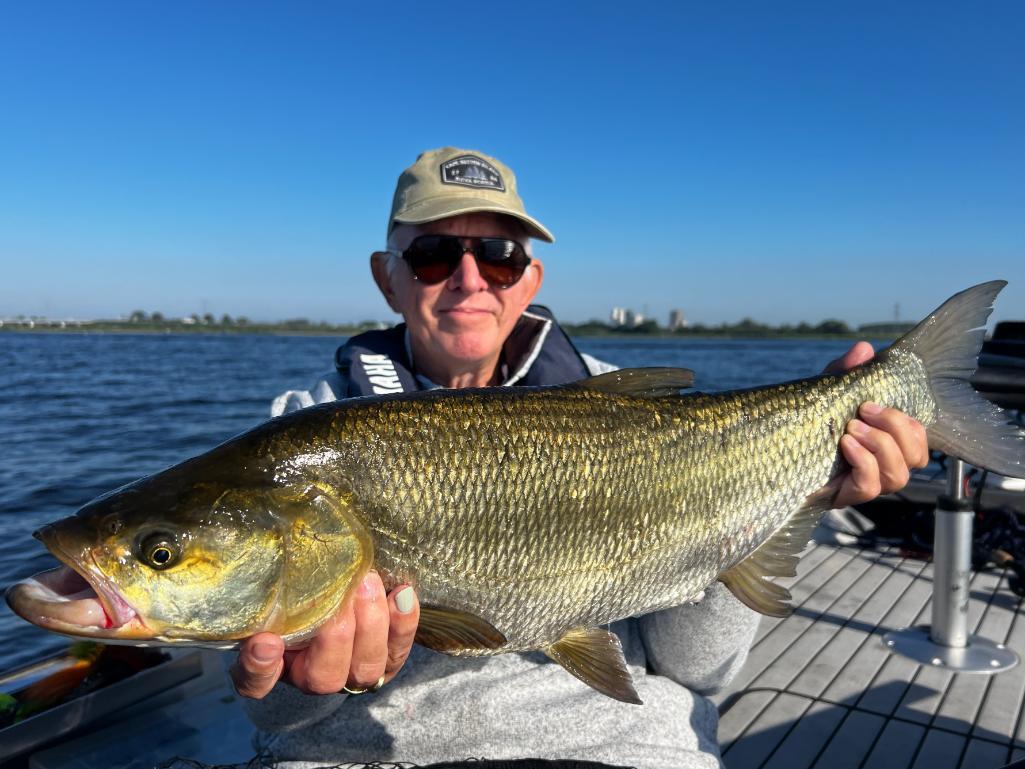
Asp (Leuciscus aspius)
Maximum length: 100 cm
Likely locations: Open stretches of the IJ, the Amstel, and larger canal corridors with current or wind-driven drift
The asp is one of the most dynamic freshwater predators in Amsterdam’s system. Unlike pike or zander, it is a fast-moving, open-water hunter that feeds primarily on schooling baitfish near the surface. Its presence tells a specific ecological story: there must be sufficient pelagic forage, adequate water clarity for visual hunting, and enough open-water space to sustain high-speed predation.
Why this fish likes Amsterdam: Ecologically, asp represent the link between lower-trophic pelagic production and upper-level freshwater predation. They convert schooling baitfish biomass into apex energy in a way that few other European freshwater species do. It’s a big compliment to our water system that the asp thrives in Amsterdam.
In short:
Where asp hunt, the open-water food web is functioning.
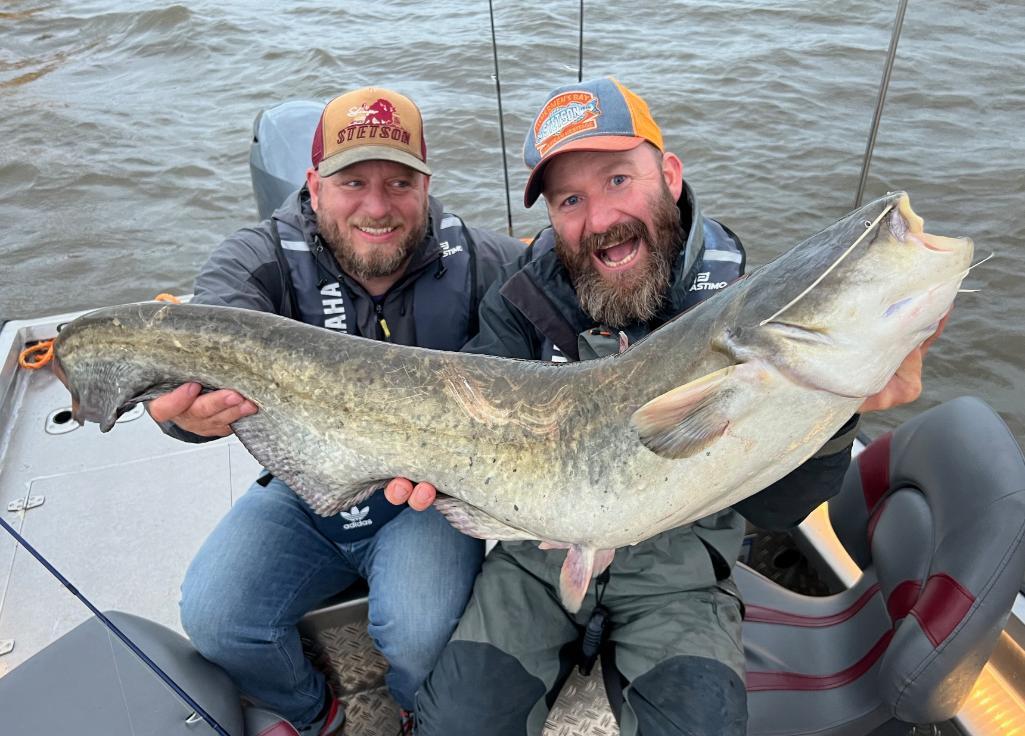
Wels Catfish (Silurus glanis)
Maximum length: 300 cm
Likely locations: The IJ, Amstel, and connected canal systems with depth, structure, and stable oxygen
The wels catfish is Europe’s largest freshwater predator, capable of reaching truly extraordinary sizes. While not native to all Dutch waters historically, it has established populations in several connected systems and is occasionally recorded within Amsterdam’s broader aquatic network.
Why this fish likes Amsterdam: Catfish are long-lived, slow-growing apex predators that require substantial prey biomass and stable environmental conditions. They are tolerant of variable turbidity, but they depend on adequate oxygen and a consistent forage base. In other words, a system must be productive and structurally complex to support them over time.
Ecologically, the presence of wels catfish signals something different from pike or zander. It suggests depth, thermal refuge, and a mature food web capable of sustaining very large-bodied fish. In urban environments, that is not a given.
In short:
Where catfish persist, the ecosystem has depth — both literally and biologically.
The Small Species That Hold It Together
Three-Spined Stickleback (Gasterosteus aculeatus)
Maximum length: 11 cm
Small but foundational.
Sticklebacks stabilize predator diets and respond quickly to habitat shifts.
In short:
They are the ecosystem’s safety net.
European Bitterling (hodeus amarus)
Maximum length: 11 cm
Spawning inside living mussels, bitterling depend on intact benthic communities.
In short:
If bitterling thrive, mussels thrive — and that means the bottom is alive.
Crucian Carp (Carassius carassius)
Maximum length: 64 cm
A Red List species in parts of Europe, crucian carp survive in plant-rich, structurally complex waters.
That Amsterdam supports them highlights refuge value within the city.
In short:
Urban water can protect what rural landscapes have lost.
Amsterdam’s True Strength
Zander, perch and pike made Amsterdam famous. But biodiversity is what makes it resilient. Our canals, the river Amstel, River IJ, adjacent lakes and polders, the North Sea Chanel and Amsterdam Rhine Channel form a system that supports:
- Flatfish from the sea
- Seasonal pelagic forage
- Ancient migratory lamprey
- Mussel-dependent bitterling
- Red List crucian carp
…is not just fishable. It is ecologically layered, connected, and surprisingly robust. Amsterdam may be known for predator fishing. But its true distinction lies in the fact that beneath the predators, the entire food web still functions. And that is far rarer than a trophy zander.
Why Biodiversity Is the Real Reason the Predator Fishing Is So Good
Zander, perch and pike put Amsterdam on the global angling map. That reputation is deserved. Few capital cities can offer consistent, technical predator fishing at this level. But predators do not thrive in isolation. They are the visible expression of something deeper.
Strong zander fishing depends on stable forage layers. Perch need abundant small fish and invertebrates to grow quickly. Pike require complex structure and a food web that does not collapse under pressure. None of that exists without oxygen stability, benthic productivity, and seasonal nutrient input.
The flounder and mullet in the brackish zones tell us the lower food web is active. The smelt and occasional herring reveal that pelagic energy still enters the system. Bitterling and loach confirm that the bottom layers are biologically alive rather than sterile sediment. Even the migration of lamprey and trout signals that the corridor between sea and inland waters has not been completely severed.
Taken together, these species form the foundation beneath the predators. And in heavily pressured urban waters, foundation is everything.
Biodiversity creates resilience. It buffers poor recruitment years. It stabilizes forage availability. It allows predator populations to persist even under intense angling pressure and constant boat traffic.
This is why Amsterdam continues to produce strong predator fishing despite being a dense metropolitan system. The structure of the food web remains intact.
Amsterdam may be famous for its zander. But the reason those zander are here — season after season — is because beneath them, the ecosystem is still working.
And that, more than any single trophy fish, is the real crown jewel of Amsterdam.
Recent Comments