
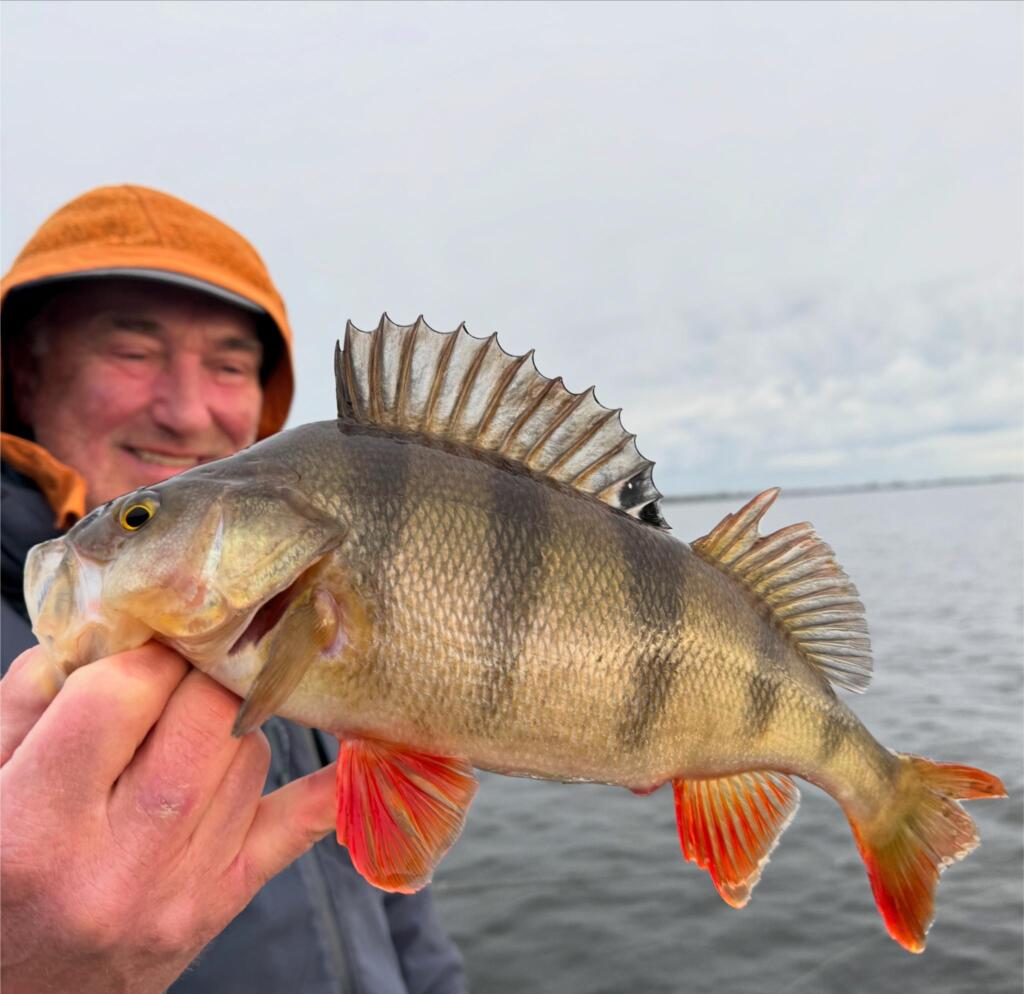
The winter fishing season in Amsterdam has been an interesting one so far. Aside from the extremely cold Christmas period, winter fishing in and around the city has been really productive. Zander fishing required precision and patience, but with the right approach we still enjoyed excellent numbers. Fat winter perch – I have to be honest here – has been tough for some reason. Pike fishing on the other hand has been consistently solid – both in numbers, as well as size and weight.
Zander Movement in Amsterdam Waters During Winter
From the end of November onwards, most zander started migrating toward the deeper sections of Amsterdam’s waters. But not all of them — and that made all the difference. Personally, I avoid fishing deeper than roughly 8–10 meters to reduce the risk of barotrauma and fish mortality. Luckily, a fair number of fish stayed within that safer zone, making responsible winter fishing in Amsterdam very possible.
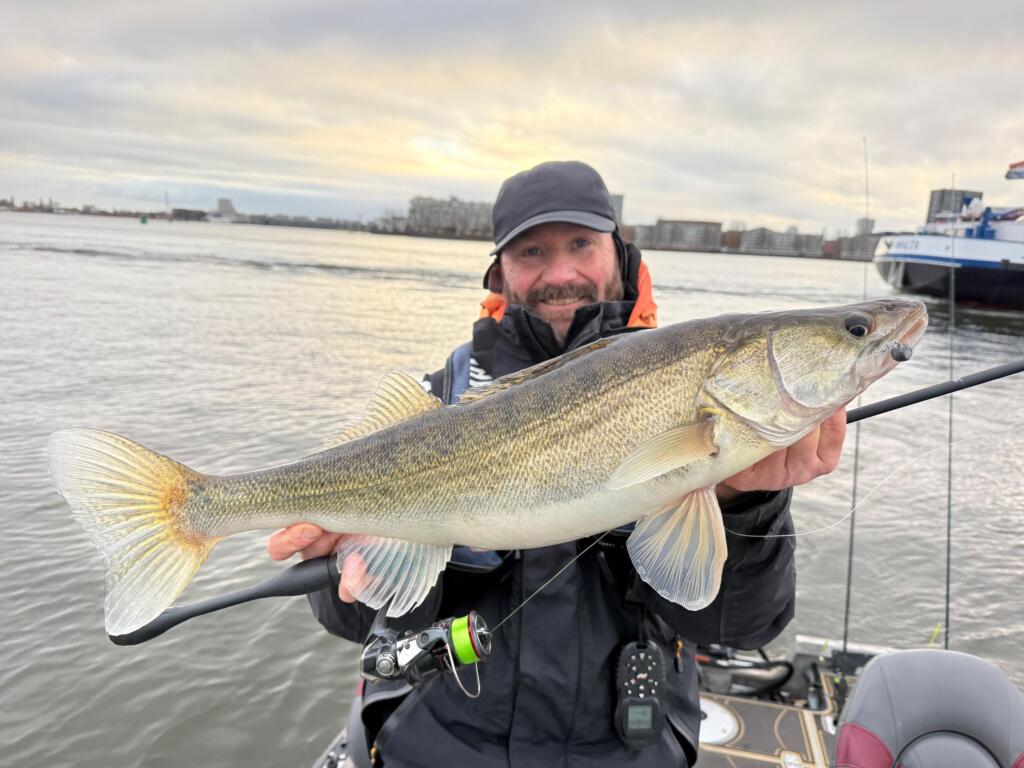
A Thin Line Between Empty Water and a Honey Hole
Some days, zander seemed to disappear overnight from spots that had been full of fish just a day earlier. This was especially noticeable after sudden temperature drops caused by persistent eastern winds in December. Side-scan sonar revealed the truth: the fish were often still there, only a few meters deeper, glued tightly to the bottom. The difference between blank water and a productive spot was sometimes just one thin depth line.
V-Tail Softbaits Made the Difference
Casting jigs with 7ft spinning rods proved largely ineffective, so we switched to slower, more subtle techniques — and that paid off. Both the ned rig (yes, also deadly for zander in winter) and the drop shot consistently saved the day.
We tested curly tails, paddle tails, and V-tails, but once again the V-tail softbaits stood out. Especially the 10 cm Spro V-Power in UV Brown Chartreuse, which was inhaled time and time again. Morning bites were cautious, but during the golden hour before sunset the fish suddenly turned aggressive. It was not uncommon to catch over 50% of the day’s fish between 3 and 5 pm.
During these short feeding windows, switching back to classic paddle tails on 7–10 gram jigheads proved highly effective — and a welcome change after hours of slow drop-shot fishing.
As temperatures dropped sharply at the end of the year, bite frequency dropped as well. We still caught double-digit numbers most of the days, but mostly smaller fish. Larger zander were clearly inactive for most of the day. Only pelagic sharp-shooting in early morning and late afternoon consistently produced 70 cm+ bonus fish.
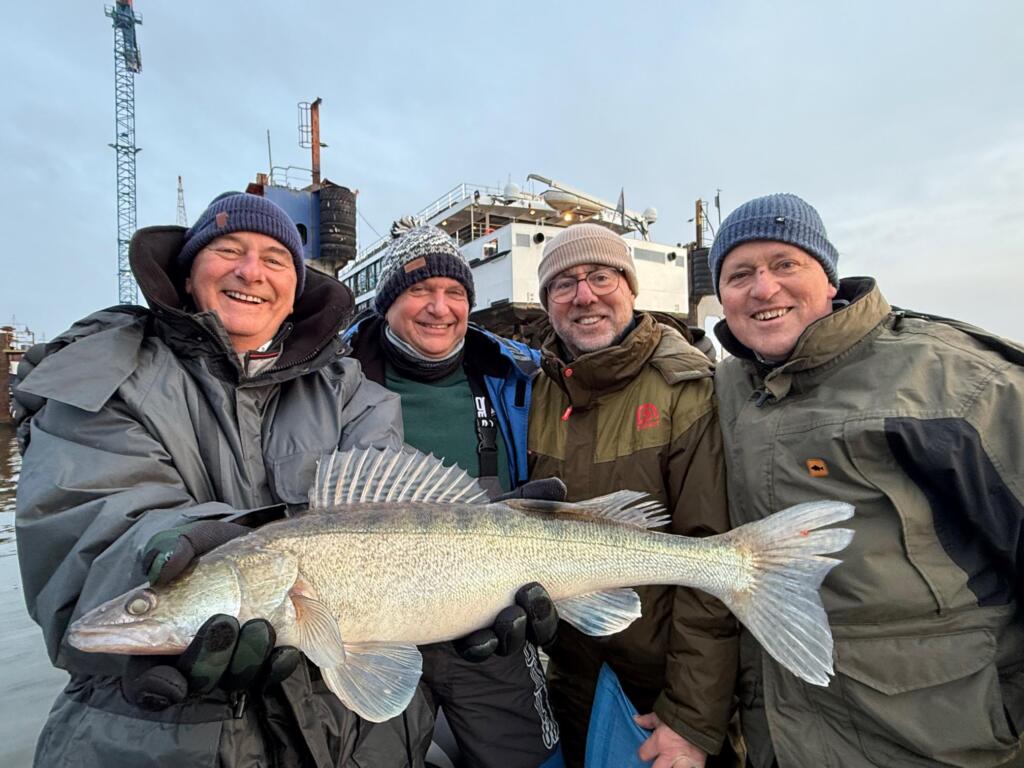
Stormy Start to the New Year
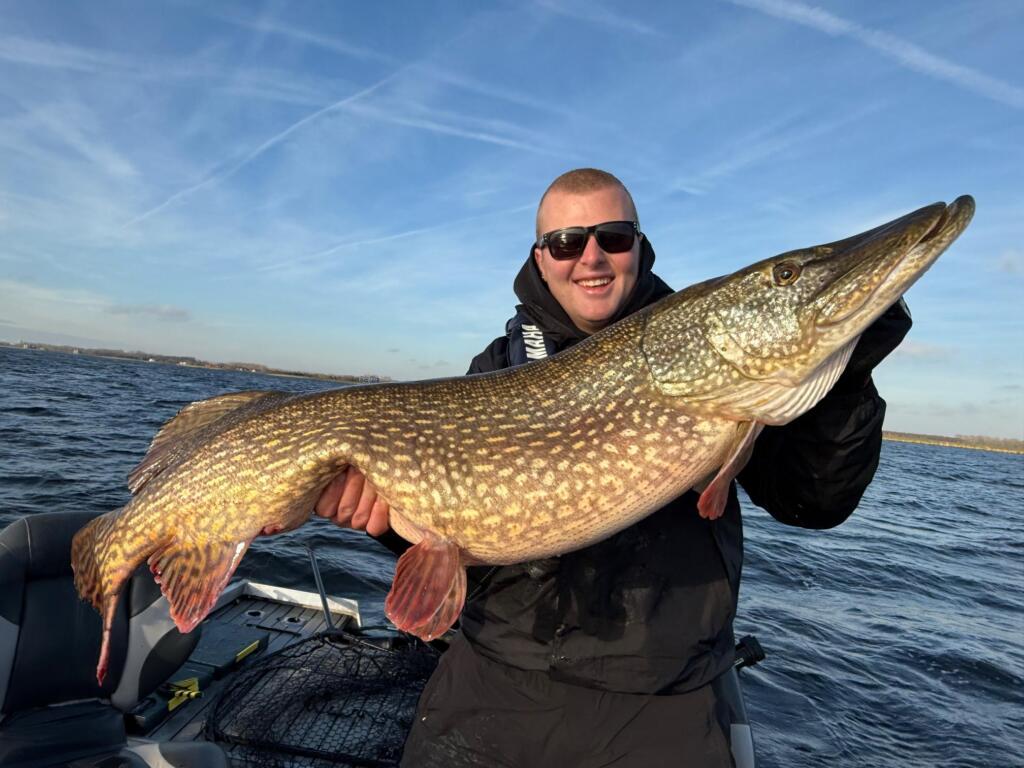
As said, December had been good to us, with a few of the fattest pike we have caught in years. The first days of 2026 however were simply unfishable. Frozen trailer ramps forced my guiding business to pause briefly, and last-minute bookings understandably disappeared. Snowstorms swept across the country while I enjoyed the downtime with my family, warm and comfortable by the stove.
On January 5th, we finally returned to the water, targeting pike on the large lakes around Amsterdam. What followed was unforgettable. We expected cold — we did not expect a full-blown snowstorm. My guests, all seasoned winter anglers, didn’t flinch for a second.
Fishing was tough. After weeks of extreme cold, the fish were sluggish. While most of the Netherlands was ice-skating, we needed nearly two hours for the first pike — highly unusual. Still, we avoided a blank, and that felt like an achievement in itself, given the circumstances as shown below.
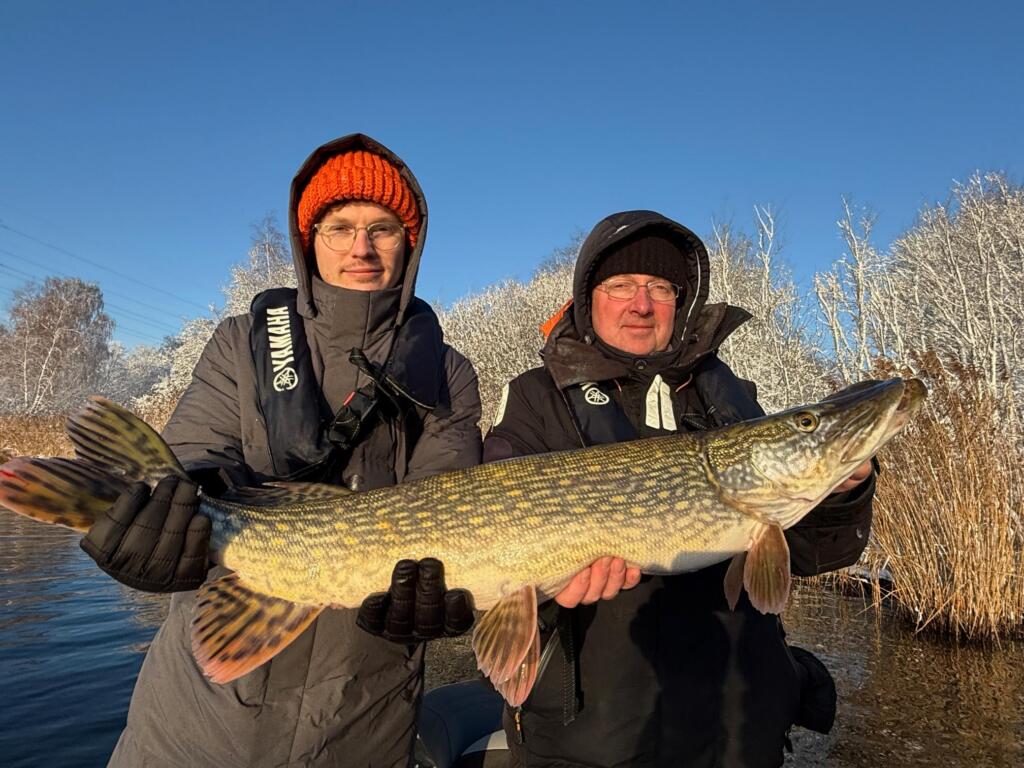
As the snowfall intensified, the boat and crew slowly disappeared under a white veil. It was harsh, difficult fishing, but also mesmerizing. Smaller softbaits on light jigheads, fished tight to the bottom, eventually produced more fish. The highlight was a stunning winter pike just after the snow stopped, under a pale blue winter sky — just shy of one meter and around 15 lb, the second-largest pike my guest had ever caught.
Back to “Normal” Winter Conditions
Severe winters like this are becoming increasingly rare due to climate change. While that is deeply concerning, milder winters do make winter fishing in Amsterdam more consistent. With water temperatures now stabilizing between 2 and 4°C, both zander and pike are clearly becoming more active again.
This week alone, we had two sessions on the River IJ producing 9 and 17 zander, ranging from 40 to 73 cm. The rest of the week is fully booked, with upcoming days dedicated to hunting big pike, as well as large winter perch, on the open water. I can’t wait to get back out there — there’s still unfinished business.
Winter Fishing in Amsterdam – Fully Equipped
If you’re visiting Amsterdam in January, February or March, and you want to experience winter fishing firsthand, feel free to get in touch or book a trip. Cold is no excuse — I provide warm winter clothing, including insulated boots in sizes 10 and 11.
Tight lines,
Fishing Guide Juul
Recent Comments